
Used Tractor Lifting Upper Arm
96 available products
A lifting arm cracked at the weld or worn splines on the shaft means play in the entire lift mechanism: the implement no longer lifts straight and the load shifts to the rest of the hitch. TMC Bejenne removes upper arms from the tractors it dismantles and offers them as used parts, workshop-checked. They complete our range of tractor lift parts, with genuine components costing 30 to 70% less than new ones.
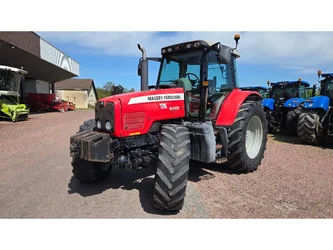
![Upper lift arm for MASSEY FERGUSON 6465]()
Upper lift arm for MASSEY FERGUSON 6465
In stock, deliverable within 2-3 daysGet a quote![Upper lift arm for NEW-HOLLAND T5050]()
Upper lift arm for NEW-HOLLAND T5050
In stock, deliverable within 2-3 daysGet a quote![Upper lift arm for MCCORMICK MTX 120]()
Upper lift arm for MCCORMICK MTX 120
In stock, deliverable within 2-3 daysGet a quote![Upper lift arm for MASSEY FERGUSON 6455]()
Upper lift arm for MASSEY FERGUSON 6455
In stock, deliverable within 2-3 daysGet a quote![Upper lift arm for JOHN-DEERE 6115 R]()
Upper lift arm for JOHN-DEERE 6115 R
In stock, deliverable within 2-3 daysGet a quote![Upper lift arm for NEW-HOLLAND TM 135]()
Upper lift arm for NEW-HOLLAND TM 135
In stock, deliverable within 2-3 daysGet a quote![Upper lift arm for CLAAS ARES 556]()
Upper lift arm for CLAAS ARES 556
In stock, deliverable within 2-3 daysGet a quote![Upper lift arm for MASSEY FERGUSON 6612]()
Upper lift arm for MASSEY FERGUSON 6612
In stock, deliverable within 2-3 daysGet a quote![Upper lift arm for DEUTZ FAHR 6150]()
Upper lift arm for DEUTZ FAHR 6150
In stock, deliverable within 2-3 daysGet a quote![Upper lift arm for JOHN-DEERE 6150 R]()
Upper lift arm for JOHN-DEERE 6150 R
In stock, deliverable within 2-3 daysGet a quote![Upper lift arm for CASE IH 4230]()
Upper lift arm for CASE IH 4230
In stock, deliverable within 2-3 daysGet a quote![Upper lift arm for VALMET T213]()
Upper lift arm for VALMET T213
In stock, deliverable within 2-3 daysGet a quote![Upper lift arm for JOHN-DEERE 6120 M]()
Upper lift arm for JOHN-DEERE 6120 M
In stock, deliverable within 2-3 daysGet a quote![Upper lift arm for NEW-HOLLAND T7040]()
Upper lift arm for NEW-HOLLAND T7040
In stock, deliverable within 2-3 daysGet a quote![Upper lift arm for KUBOTA M9960 DTHQ]()
Upper lift arm for KUBOTA M9960 DTHQ
In stock, deliverable within 2-3 daysGet a quote![Upper lift arm for RENAULT 461]()
Upper lift arm for RENAULT 461
In stock, deliverable within 2-3 daysGet a quote![Upper lift arm for JOHN-DEERE 6430]()
Upper lift arm for JOHN-DEERE 6430
In stock, deliverable within 2-3 daysGet a quote![Upper lift arm for NEW-HOLLAND TM 135]()
Upper lift arm for NEW-HOLLAND TM 135
In stock, deliverable within 2-3 daysGet a quote![Upper lift arm for NEW-HOLLAND TG 230]()
Upper lift arm for NEW-HOLLAND TG 230
In stock, deliverable within 2-3 daysGet a quote![Upper lift arm for NEW-HOLLAND TM 155]()
Upper lift arm for NEW-HOLLAND TM 155
In stock, deliverable within 2-3 daysGet a quote![Upper lift arm for CASE IH MAXXUM 5120]()
Upper lift arm for CASE IH MAXXUM 5120
In stock, deliverable within 2-3 daysGet a quote![Upper lift arm for RENAULT 103-54]()
Upper lift arm for RENAULT 103-54
In stock, deliverable within 2-3 daysGet a quote![Upper lift arm for LINDNER GEOTRAC 94]()
Upper lift arm for LINDNER GEOTRAC 94
In stock, deliverable within 2-3 daysGet a quote![Upper lift arm for NEW-HOLLAND T5]()
Upper lift arm for NEW-HOLLAND T5
In stock, deliverable within 2-3 daysGet a quote![Upper lift arm for JOHN-DEERE 6250 R]()
Upper lift arm for JOHN-DEERE 6250 R
In stock, deliverable within 2-3 daysGet a quote![Upper lift arm for CASE IH MXU 125]()
Upper lift arm for CASE IH MXU 125
In stock, deliverable within 2-3 daysGet a quote![Upper lift arm for NEW-HOLLAND TL 80]()
Upper lift arm for NEW-HOLLAND TL 80
In stock, deliverable within 2-3 daysGet a quote![Upper lift arm for MASSEY FERGUSON 3070]()
Upper lift arm for MASSEY FERGUSON 3070
In stock, deliverable within 2-3 daysGet a quote![Upper lift arm for MASSEY FERGUSON 5712]()
Upper lift arm for MASSEY FERGUSON 5712
In stock, deliverable within 2-3 daysGet a quote![Upper lift arm for SAME LASER 130]()
Upper lift arm for SAME LASER 130
In stock, deliverable within 2-3 daysGet a quote![Upper lift arm for RENAULT 103-54]()
Upper lift arm for RENAULT 103-54
In stock, deliverable within 2-3 daysGet a quote![Upper lift arm for CASE IH MXU 115]()
Upper lift arm for CASE IH MXU 115
In stock, deliverable within 2-3 daysGet a quote![Upper lift arm for VALMET T213]()
Upper lift arm for VALMET T213
In stock, deliverable within 2-3 daysGet a quote![Upper lift arm for CASE IH PUMA 160]()
Upper lift arm for CASE IH PUMA 160
In stock, deliverable within 2-3 daysGet a quote![Upper lift arm for NEW-HOLLAND T7.190]()
Upper lift arm for NEW-HOLLAND T7.190
In stock, deliverable within 2-3 daysGet a quote![Upper lift arm for CASE IH 740]()
Upper lift arm for CASE IH 740
In stock, deliverable within 2-3 daysGet a quote
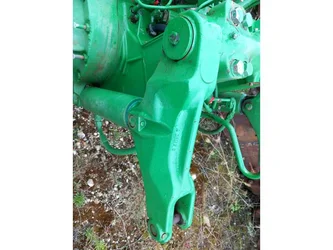
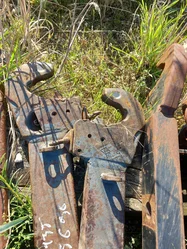
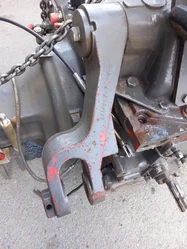
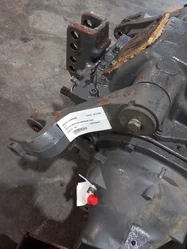
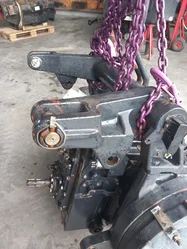
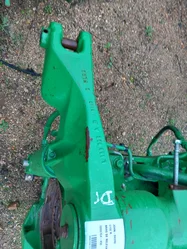
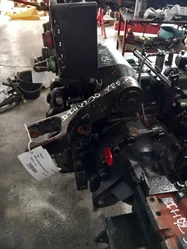
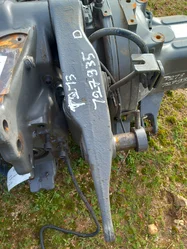
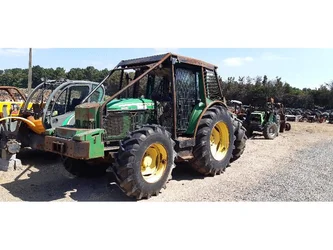
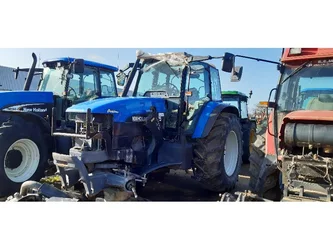
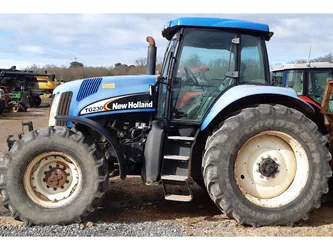
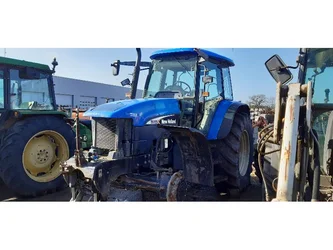
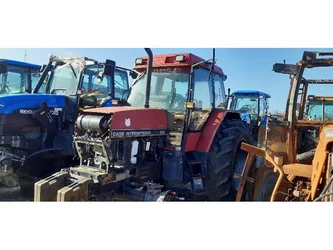
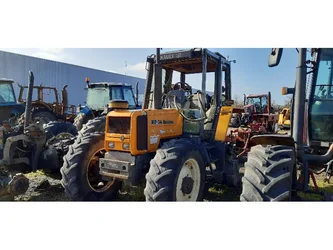

Lifting and Power Arms: The Role of the Upper Arm
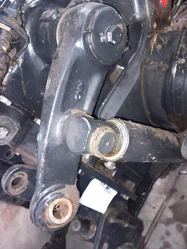
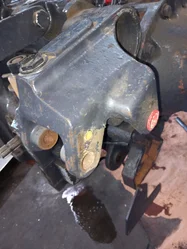
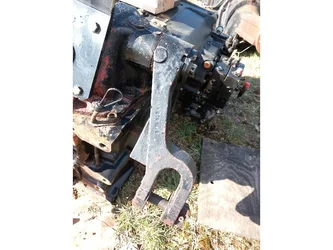
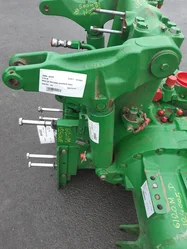
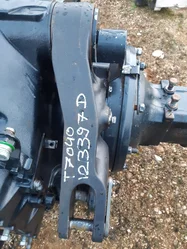
The upper arm, also called the lifting arm or power arm depending on the region, is splined or keyed onto the lift shaft at the rear of the tractor. When the hydraulic lift cylinder rotates the shaft, it raises the lower arms via the lift links. It transmits the full effort: the tractor's lifting capacity passes through its splines, and a worn arm reduces it accordingly. On tractors used with heavy implements, it is often the first hydraulic lift part to wear out.
Tractor Lift Arms Available at TMC Bejenne
- Left and right upper arms, removed from identified tractors: specify if you need the right or left lift arm.
- Lift shafts and associated splines, when removed together with the arm.
- Related parts: lift housings, auxiliary cylinders, and stabilizers.
- Agricultural harvesting equipment: arms removed from combine harvesters, in addition to tractors.
- Range: over 25,000 references with 90% of requests fulfilled.
Accessories and Types of Lift Arms
A three-point hitch consists of several parts with distinct roles. The upper arm, fixed on the shaft, transmits the cylinder's force. The lift links connect it to the lower lift arm, which carries the implement via its hitch balls. The central third point allows precise adjustment of the implement's vertical alignment. Stabilizers limit lateral play. Each component matches the tractor's hitch category, with specific pin and ball diameters. The lower lift arm has its own page: used lower lift arms.
Tractor Lift Arms by Brand: Renault, John Deere, Kubota
- Renault: 461, 103-54, 120-54, 155-54, Celtis 456 RX, and Ares 556.
- John Deere: 5500 N, 5720, 6100, 6210, 6310, 6430, 6115 R, 6150 R, 6920 S, and 7280 R.
- Kubota: M9960 DTHQ.
- Case IH: 1056 XL, 1455 XL, Maxxum, MXU, Puma, and Magnum.
- New Holland and Massey Ferguson: TM, T5, T6, T7, TL, MF 3000, 5700, 6400, 6600, and 8660 series.
- Other tractor models: Deutz-Fahr, Ford, Fiat, Same, Claas, Valmet, Steyr, Fendt, and McCormick.
Micro Tractor Lift Arms: What Our Stock Covers
Our upper arms come from dismantled tractors and agricultural equipment, from the Renault 461 to the John Deere 7280 R. Currently, our online stock does not include lift arms for micro tractors: on these smaller tractor models, dimensions, hitch category, and shaft differ significantly. If you need a part for a micro tractor, contact us with the brand and model of the micro tractor: our advisors check incoming dismantled parts before responding.
How to Identify the Right Upper Arm for Your Tractor
- Model and serial number: two tractors of the same brand can have different arms.
- Hitch category: category 1, 2, or 3, indicated in the tractor manual.
- Splines: the number on the shaft and inside the arm hub.
- Length between pins: measured from the shaft to the lift link eye.
- Lift type: mechanical or electronic, and the lifting capacity, which sometimes affects the arm.
- Photo: the arm in place, shaft side, and lift link side.
Used Tractor Lift Arms: Checked Before Shipping
TMC Bejenne has been dismantling agricultural equipment since 1945, on an 11-hectare site in Naintré. Each lift arm is removed by our specialized technicians, cleaned, and inspected: spline and pin condition, straightness, absence of cracks at anchor points, no excessive play at the lift link eye. It is then cataloged by brand, tractor model, and hitch category. You receive a genuine part, matching the manufacturer's specs, ready for installation. Our advisors confirm compatibility at 05 86 24 00 26.
These are the lift arms. At the top, the upper arms, or lifting arms, are attached to the lift shaft. At the bottom, on each side, the lower lift arm carries the implement via its hitch balls. Between them, the lift links transmit movement, and the third point completes the hitch. Together, they form the rear lift or three-point hitch.
On the hydraulic lift side: low oil level, clogged filter, worn pump, leaking cylinder or distributor. On the mechanical side: worn splines on the upper arm, twisted arm, seized lift link, or balls with excessive play, leading to reduced lifting capacity. On the electronic side, for controlled lifts: faulty force or position sensors. Have your mechanic diagnose the issue before ordering a part.
The most common signs are play in the splines, a crack near the hub or lift link eye, or a slightly twisted arm after lateral stress. A lift that no longer raises symmetrically may also stem from this. If one arm has play, have the lower arms and lift links checked as well, and verify that the replacement arm matches the hitch category.
Can't find the part you're looking for?
Fill out this form or contact us at 05 86 24 00 26