
Used Tractor & Combine Harvester Sensors and Contactors
154 available products
A faulty sensor or contactor on your tractor or combine harvester can quickly halt your operations. Discover here a wide range of used electrical parts, carefully tested before sale: starter contactors, lifting position sensors, headlight contactors, and more. Each part is compatible with major agricultural brands, offering an optimal quality/price ratio.
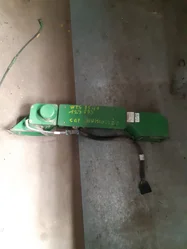
![Sensor and contactor for NEW-HOLLAND CR 980]()
Sensor and contactor for NEW-HOLLAND CR 980
In stock, deliverable within 2-3 daysGet a quote![Sensor and contactor for NEW-HOLLAND TX 64]()
Sensor and contactor for NEW-HOLLAND TX 64
In stock, deliverable within 2-3 daysGet a quote![Sensor and contactor for NEW-HOLLAND TX 64]()
Sensor and contactor for NEW-HOLLAND TX 64
In stock, deliverable within 2-3 daysGet a quote![Sensor and contactor for CASE IH AXIAL-FLOW 8010]()
Sensor and contactor for CASE IH AXIAL-FLOW 8010
In stock, deliverable within 2-3 daysGet a quote![Sensor and contactor for JOHN-DEERE 9540 WTS]()
Sensor and contactor for JOHN-DEERE 9540 WTS
In stock, deliverable within 2-3 daysGet a quote![Sensor and contactor for NEW-HOLLAND CX 820]()
Sensor and contactor for NEW-HOLLAND CX 820
In stock, deliverable within 2-3 daysGet a quote![Sensor and contactor for NEW-HOLLAND CX 880]()
Sensor and contactor for NEW-HOLLAND CX 880
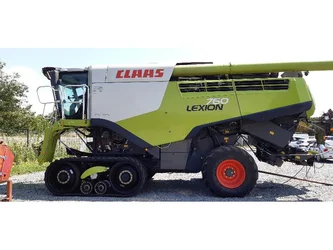
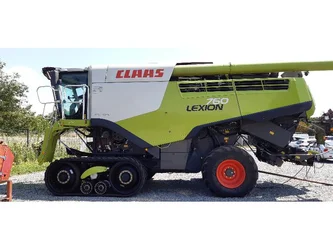
In stock, deliverable within 2-3 daysGet a quote![Sensor and contactor for CLAAS LEXION 760]()
Sensor and contactor for CLAAS LEXION 760
In stock, deliverable within 2-3 daysGet a quote![Sensor and contactor for NEW-HOLLAND CX 8090]()
Sensor and contactor for NEW-HOLLAND CX 8090
In stock, deliverable within 2-3 daysGet a quote![Sensor and contactor for NEW-HOLLAND CX 8050]()
Sensor and contactor for NEW-HOLLAND CX 8050
In stock, deliverable within 2-3 daysGet a quote![Sensor and contactor for NEW-HOLLAND CX 8050]()
Sensor and contactor for NEW-HOLLAND CX 8050
In stock, deliverable within 2-3 daysGet a quote![Sensor and contactor for CASE IH AXIAL-FLOW 8010]()
Sensor and contactor for CASE IH AXIAL-FLOW 8010
In stock, deliverable within 2-3 daysGet a quote![Sensor and contactor for JOHN-DEERE S660]()
Sensor and contactor for JOHN-DEERE S660
In stock, deliverable within 2-3 daysGet a quote![Sensor and contactor for JOHN-DEERE 9780 CTS]()
Sensor and contactor for JOHN-DEERE 9780 CTS
In stock, deliverable within 2-3 daysGet a quote![Sensor and contactor for JOHN-DEERE 9780 CTS]()
Sensor and contactor for JOHN-DEERE 9780 CTS
In stock, deliverable within 2-3 daysGet a quote![Sensor and contactor for NEW-HOLLAND CX 8050]()
Sensor and contactor for NEW-HOLLAND CX 8050
In stock, deliverable within 2-3 daysGet a quote![Sensor and contactor for CASE IH AXIAL-FLOW 2388]()
Sensor and contactor for CASE IH AXIAL-FLOW 2388
In stock, deliverable within 2-3 daysGet a quote![Sensor and contactor for NEW-HOLLAND CR 9060]()
Sensor and contactor for NEW-HOLLAND CR 9060
In stock, deliverable within 2-3 daysGet a quote![Sensor and contactor for CLAAS LEXION 760]()
Sensor and contactor for CLAAS LEXION 760
In stock, deliverable within 2-3 daysGet a quote![Sensor and contactor for CLAAS LEXION 760]()
Sensor and contactor for CLAAS LEXION 760
In stock, deliverable within 2-3 daysGet a quote![Sensor and contactor for NEW-HOLLAND TX 36]()
Sensor and contactor for NEW-HOLLAND TX 36
In stock, deliverable within 2-3 daysGet a quote![Sensor and contactor for MASSEY FERGUSON 6612]()
Sensor and contactor for MASSEY FERGUSON 6612
In stock, deliverable within 2-3 daysGet a quote![Sensor and contactor for DEUTZ FAHR 6150]()
Sensor and contactor for DEUTZ FAHR 6150
In stock, deliverable within 2-3 daysGet a quote![Sensor and contactor for DEUTZ FAHR 6150]()
Sensor and contactor for DEUTZ FAHR 6150
In stock, deliverable within 2-3 daysGet a quote![Sensor and contactor for VALMET T213]()
Sensor and contactor for VALMET T213
In stock, deliverable within 2-3 daysGet a quote![Sensor and contactor for HESTON 4880]()
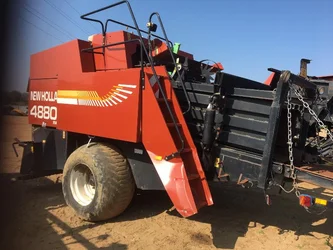
Sensor and contactor for HESTON 4880
In stock, deliverable within 2-3 daysGet a quote![Sensors and Contactors for NEW-HOLLAND BB 1290]()
Sensors and Contactors for NEW-HOLLAND BB 1290
In stock, deliverable within 2-3 daysGet a quote![Sensors and Contactors for NEW-HOLLAND CX 820]()
Sensors and Contactors for NEW-HOLLAND CX 820
In stock, deliverable within 2-3 daysGet a quote![Sensor and contactor for CLAAS LEXION 570]()
Sensor and contactor for CLAAS LEXION 570
In stock, deliverable within 2-3 daysGet a quote![CAPTEUR LASER CONTROLE OTONS]()
CAPTEUR LASER CONTROLE OTONS
In stock, deliverable within 2-3 daysGet a quote![CAPTEUR LASER CONTROLE OTONS]()
CAPTEUR LASER CONTROLE OTONS
In stock, deliverable within 2-3 daysGet a quote![Sensor and contactor for JOHN-DEERE 2066]()
Sensor and contactor for JOHN-DEERE 2066
In stock, deliverable within 2-3 daysGet a quote![Sensor and contactor for CASE IH AXIAL-FLOW 1660]()
Sensor and contactor for CASE IH AXIAL-FLOW 1660
In stock, deliverable within 2-3 daysGet a quote![Sensor and contactor for CASE IH AXIAL-FLOW 1660]()
Sensor and contactor for CASE IH AXIAL-FLOW 1660
In stock, deliverable within 2-3 daysGet a quote![Sensor and contactor for JOHN-DEERE 6150 R]()
Sensor and contactor for JOHN-DEERE 6150 R
In stock, deliverable within 2-3 daysGet a quote![Sensor and contactor for CASE IH AXIAL-FLOW 8010]()
Sensor and contactor for CASE IH AXIAL-FLOW 8010
In stock, deliverable within 2-3 daysGet a quote
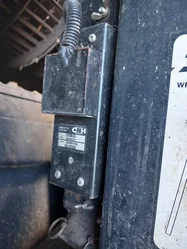
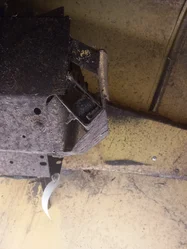
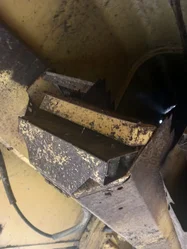
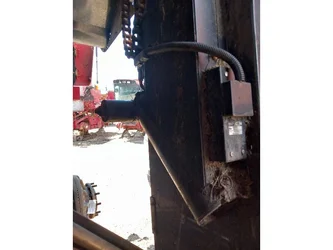
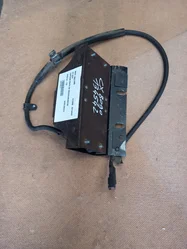
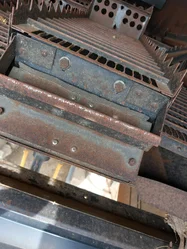
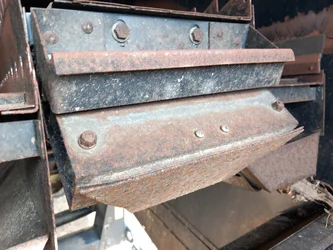
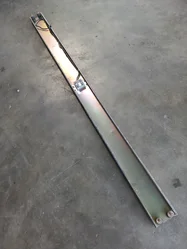
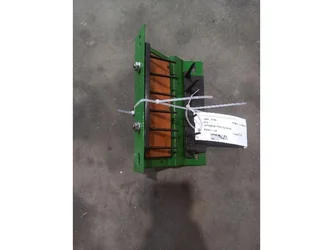
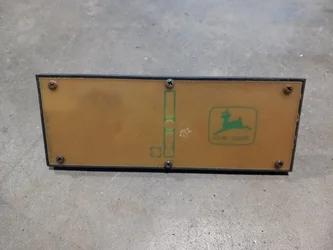
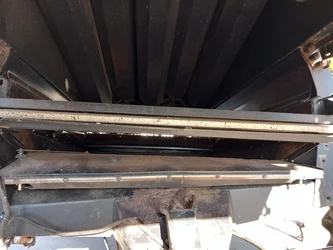

Used Contactors and Sensors for Tractor & Combine Harvester
A loose connection in a starter contactor of a John Deere 6030 or a Case IH Puma can immobilize the machine mid-harvest. This common fault in tractors over ten years old is quickly resolved with the right used part, properly identified and tested.
Our stock covers a broad spectrum, from engine speed sensors to brake contactors, including lighting switches. Each part is functionally tested before sale, significantly reducing the risk of surprises during installation.
Choosing a used part can cut the cost by half to a third compared to the original manufacturer's price, without compromising reliability.
Our Available Used Contactors
- The multi-position key starter contactor fits Massey Ferguson, Fendt, Deutz Fahr, and New Holland tractors.
- Pull-start glow plug contactors are available for Renault, Ford Fordson, and Someca Fiat models.
- Headlight and cabin lighting contactors are stocked for Claas, Valtra, and John Deere 6000 series.
- Electrohydraulic lifting position sensors are available for Steyr, Same, and Massey Ferguson.
- Brake and seat contactors, essential for operator safety, are stocked for several common ranges.
- Each reference is identified by its manufacturer number to ensure exact compatibility with your machine.
- Stock is regularly refreshed thanks to the dismantling of complete tractors from across France.
What Types of Contactors Are Used on Tractors?
On an agricultural tractor, contactors serve various functions depending on their location. There are mainly four types: the starter contactor, glow plug buttons, lighting switches, and position sensors.
The key starter contactor is probably the most used. At every ignition, it undergoes micro-electric arcs that eventually wear down its internal contacts, causing erratic starts or complete failure.
Lighting switches — work headlights, marker lights, cabin illumination — are exposed to constant frame vibrations. A brake or seat contactor, though subtle, directly affects operator safety as it cuts power when the driver leaves the seat.
Each type has specific electrical constraints in voltage and current, making precise identification essential before replacement.
Key Starter Contactor
- The ignition key typically has three or four positions: off, on, glow plug, and start with automatic return.
- On a Case IH or Same, the glow plug position activates the glow plugs before sending power to the starter.
- A worn contactor shows as a key that turns freely, or starting only if the key is held forcibly.
- Recent coded-start models, like some Fendt Vario, require an electronic contactor compatible with the control unit.
- Replacement usually requires no soldering: removing the steering column is enough to access the part.
- Flat plugs with three or four pins are the most common connectors on tractors from the 1980s to 2010s.
- Checking the manufacturer reference engraved on the original contactor housing ensures an installation without wiring adaptation.
Push-Button Start and Glow Plug
Older tractors, especially models from the 1960s to 1980s, have a push-button replacing the traditional ignition key. Two distinct buttons usually exist on the dashboard: one to activate glow plugs, the other to send power to the starter.
This electrically simpler system is mechanically more fragile. The button can seize, its return spring can fail, or its contacts oxidize over the years, causing erratic or impossible starts in damp conditions.
Best practice is to hold the glow plug button pressed for 15 to 20 seconds before engaging the starter on a cold diesel engine, a step often overlooked that speeds premature starter wear.
Agricultural Lighting and Headlight Switch
- A faulty lighting switch deprives the tractor of work headlights during night harvesting.
- Toggle or pull switches typically control several separate circuits: front headlights, beacon, and LED bar.
- Oxidation of connector pins, worsened by moisture in open cabins, is the most common cause of failure.
- On a John Deere 6000 series or Claas Axion, the lighting switch is often integrated into the left stalk of the column.
- A tested used switch under load guarantees it supports the real current of original halogen or LED headlights.
- Checking the number of pins (4 to 8 depending on the tractor) before ordering avoids incompatibility with the existing wiring.
- Universal toggle switches suit older tractors whose original manufacturer references are no longer available.
Lifting Position Sensor
The lifting position sensor sends real-time data on the height of the lifting arms to the electrohydraulic control unit. Without a reliable signal, the system cannot regulate the working depth of attached implements, whether a seeder on a Massey Ferguson 6700 or a cultivator on a Steyr 4130.
Its failure is easily recognizable: the lift moves up or down continuously, or stays stuck despite controls. Some tractors display an error code on the dashboard.
Mounted on the rear lifting housing, this sensor is exposed to mud splashes and repeated shocks. Replacement with a tested used part identified by manufacturer reference immediately restores hydraulic control accuracy.
Compatibility by Tractor Brand
- Massey Ferguson, Landini, and Valtra often share identical contactors due to their belonging to the AGCO group.
- Recent Fendt Vario tractors use coded electronic contactors, incompatible with standard mechanical models.
- Case IH and Same sometimes share the same starter contactor reference, like part 1966930C1.
- 1990s Renault Claas tractors accept universal pull contactors, easier to source used.
- John Deere 6000 and 7000 series require contactors with specific connectors different from usual European standards.
- Deutz Fahr and New Holland offer similar connectors on 2000s series, sometimes allowing cross replacement.
- For older Ford Fordson tractors, adaptable contactors exist, replacing now unavailable original references.
What Is the Price of a Used Contactors for Tractor?
The price varies significantly based on part type and tractor brand. A used key starter contactor typically costs between 15 and 60 euros, compared to 80 to 180 euros for the same part new from the manufacturer.
For a lifting position sensor, the range is higher: expect between 40 and 120 euros used, where the catalogue price often exceeds 200 euros for recent models like a Fendt Vario or Massey Ferguson 7700.
Lighting switches and push buttons remain the most affordable parts, often available under 30 euros. It's with these small components that the price gap with the new market is most striking.
What Is the Lifespan of a Used Contactor?
- A correctly selected used contactor can last between 5 and 10 years depending on tractor usage intensity.
- Repeated engine vibrations and cabin moisture remain the two main causes of premature wear.
- A contactor used on a mixed-crop tractor working 600 hours per year wears faster than one used in livestock farming.
- Cleaning connector pins twice a season with contact cleaner spray significantly extends service life.
- Erratic starting in damp weather or intermittent contact signals a contactor near end of life.
- Parts from dismantled tractors with less than 5,000 hours offer the best longevity potential.
- Storing the tractor sheltered limits oxidation of contacts and preserves the lifespan of all electrical components.
Relay or Contactor: What's the Difference?
Confusion between these two components is common, even among experienced mechanics. Their roles in a tractor's electrical circuit are fundamentally different.
The contactor acts directly on the main circuit: it is physically operated by the driver via a key, button, or lever. The relay is an electromagnetic switch controlled remotely by a low-power signal, without manual intervention.
Simply put, on a Massey Ferguson 6700, when you turn the ignition key, the contactor sends a low current signal to the starter relay, which then closes the high current circuit to the starter. The two parts work together but are not interchangeable.
A faulty relay often produces the same symptoms as a failed contactor — impossible or erratic starting — complicating diagnosis without prior electrical testing.
Role of the Contactor in Agricultural Electricity
- The contactor serves as the interface between the operator and the tractor's electrical circuits, controlling vital agricultural functions.
- On a tractor, it powers the glow plugs, starter, work lights, and power take-off sockets in succession.
- Modern agricultural tractors mostly operate at 12 volts, though some high-power machines use 24 volts.
- The agricultural environment imposes severe constraints on contactors: mud, cereal dust, condensation, and constant engine vibrations.
- A safety contactor on the power take-off automatically cuts power if the operator leaves the seat, protecting the user.
- On tractors equipped with a front loader, a dedicated contactor controls the hydraulic supply to the cylinders independently of the main circuit.
- Electrical shock resistance is standardized for agricultural contactors, as diesel starters generate current peaks exceeding 200 amps.
Why Choose TMC Bejenne for Your Parts?
TMC Bejenne has built recognized expertise in dismantling and reselling used agricultural parts, with teams able to identify the correct manufacturer reference from the first contact.
This technical mastery makes all the difference when a starter contactor or lifting sensor must be replaced quickly, without compatibility errors.
Unlike a generalist seller, every part offered on tmc-bejenne.com comes from dismantled tractors and combines with known histories. Sourcing is traceable, ensuring reliability far superior to anonymous parts bought on non-specialized platforms.
Responsiveness is another concrete advantage: farmers during the harvest season cannot wait weeks for a part ordered abroad.
Rigorous Testing Before Sale
- Each contactor undergoes an electrical continuity test to detect any internal faulty contacts before shipment.
- Pins and connectors receive detailed visual inspection: oxidation, deformation, or burning leads to systematic rejection.
- The manufacturer reference is checked and recorded on every part, ensuring assured compatibility with the targeted model.
- Technicians measure contact resistance with an ohmmeter to confirm values remain within original tolerances.
- Lifting position sensors are tested under simulated voltage to confirm accuracy of the transmitted signal.
- Any part with doubts about its functional condition is removed from stock, even if its exterior looks fine.
Can't Find Your Contactor?
The online catalog doesn't always reflect the full available stock. Contact the TMC Bejenne team directly: a simple manufacturer reference or your model designation is enough to start a targeted search in lots of parts not yet listed.
Some specific contactors — especially for older Fendt or out-of-series Deutz Fahr — are not published due to data entry time but physically exist in the workshop. A call or message often unlocks the situation within hours rather than several days of unsuccessful searches on other platforms.
A contactor on an agricultural tractor is an electrical component that opens or closes a circuit according to the driver's needs. The starter contactor, the most common one, manages the glow plug, ignition, and engine start positions. Other contactors control lighting, hydraulic lifting, or engine speed. Without it, many tractor functions become unusable.
The cost of a used starter contactor for a tractor varies depending on the brand and model of the agricultural machine. For a reused part, you generally need to budget two to three times less than for a new component. The most common models fall within a very affordable price range, while references specific to recent tractors or premium brands may represent a slightly higher investment. Choosing used from a specialist allows significant savings while benefiting from tested and functional equipment.
The main risk with a used contactor is its hidden wear: the part may have oxidized or weakened internal contacts not visible to the naked eye. Estimating its remaining lifespan is difficult. Compatibility with your tractor model must be carefully checked to avoid erratic starts or electrical malfunctions. Buying from a specialist who tests parts before sale minimizes these risks.
A relay is an electromagnetic switch that controls a low-power circuit to activate another, more powerful one. The contactor is designed to directly handle high currents, like those needed to start the engine. In summary, the relay acts as a remote control, while the contactor directly manages the power circuit. Both components complement each other in a tractor's electrical system.
To ensure a used contactor suits your tractor, start by noting the manufacturer reference on the original part. Compare it with the reference of the contactor offered for sale. Also check the number of terminals, connector types, and switching positions. In case of doubt, provide the exact make and model of your tractor to the seller for confirmation before purchase.
Yes, used contactors sold by TMC Bejenne come with a warranty, as each part undergoes rigorous verification by a specialized team before being offered for sale. This inspection process ensures the good working condition of every contactor. You can thus buy with confidence, obtaining a reliable part at a price well below that of an original component.
Can't find the part you're looking for?
Fill out this form or contact us at 05 86 24 00 26