
Used Tube
48 available products
Finding a used tube for your agricultural equipment means choosing a reliable part at a lower cost. Cardan tubes, exhaust tubes, or hydraulic tubes: these components play a crucial role in the proper functioning of your machinery. Our selection of reconditioned used tubes fits a wide range of brands and models of agricultural tractors.
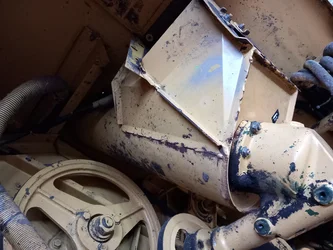
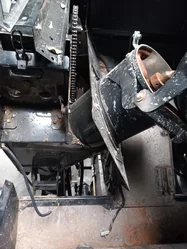
![Tube for NEW-HOLLAND TX 68]()
Tube for NEW-HOLLAND TX 68
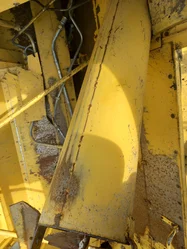
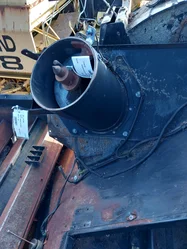
In stock, deliverable within 2-3 daysGet a quote![Tube for NEW-HOLLAND TX 64]()
Tube for NEW-HOLLAND TX 64
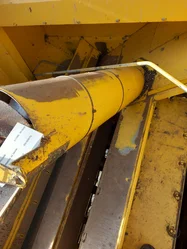
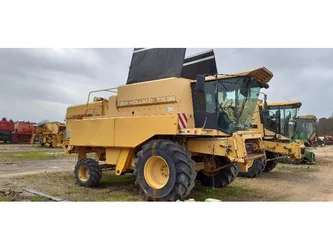
In stock, deliverable within 2-3 daysGet a quote![Tube for NEW-HOLLAND TX 66]()
Tube for NEW-HOLLAND TX 66
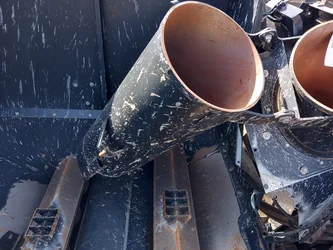
In stock, deliverable within 2-3 daysGet a quote![Tube for NEW-HOLLAND CX 8050]()
Tube for NEW-HOLLAND CX 8050
In stock, deliverable within 2-3 daysGet a quote![Tube for NEW-HOLLAND CR 9060]()
Tube for NEW-HOLLAND CR 9060
In stock, deliverable within 2-3 daysGet a quote![Tube for NEW-HOLLAND CX 8080]()
Tube for NEW-HOLLAND CX 8080
In stock, deliverable within 2-3 daysGet a quote![Tube for NEW-HOLLAND TX 36]()
Tube for NEW-HOLLAND TX 36
In stock, deliverable within 2-3 daysGet a quote![Tube for NEW-HOLLAND TX 68]()
Tube for NEW-HOLLAND TX 68
In stock, deliverable within 2-3 daysGet a quote![Tube for NEW-HOLLAND CX 840]()
Tube for NEW-HOLLAND CX 840
In stock, deliverable within 2-3 daysGet a quote![Tube for JOHN-DEERE CTS]()
Tube for JOHN-DEERE CTS
In stock, deliverable within 2-3 daysGet a quote![Tube for NEW-HOLLAND CR 980]()
Tube for NEW-HOLLAND CR 980
In stock, deliverable within 2-3 daysGet a quote![Tube for CASE IH AXIAL-FLOW 2388]()
Tube for CASE IH AXIAL-FLOW 2388
In stock, deliverable within 2-3 daysGet a quote![Tube for NEW-HOLLAND CX 8080]()
Tube for NEW-HOLLAND CX 8080
In stock, deliverable within 2-3 daysGet a quote![Tube for NEW-HOLLAND CX 8080]()
Tube for NEW-HOLLAND CX 8080
In stock, deliverable within 2-3 daysGet a quote![Tube for CASE IH AXIAL-FLOW 8010]()
Tube for CASE IH AXIAL-FLOW 8010
In stock, deliverable within 2-3 daysGet a quote![Tube for NEW-HOLLAND TX 66]()
Tube for NEW-HOLLAND TX 66
In stock, deliverable within 2-3 daysGet a quote![Tube for JOHN-DEERE S660]()
Tube for JOHN-DEERE S660
In stock, deliverable within 2-3 daysGet a quote![Tube for NEW-HOLLAND CX 760]()
Tube for NEW-HOLLAND CX 760
In stock, deliverable within 2-3 daysGet a quote![Tube for NEW-HOLLAND CX 760]()
Tube for NEW-HOLLAND CX 760
In stock, deliverable within 2-3 daysGet a quote![Tube for CASE IH AXIAL-FLOW 7130]()
Tube for CASE IH AXIAL-FLOW 7130
In stock, deliverable within 2-3 daysGet a quote![Tube for NEW-HOLLAND CR 980]()
Tube for NEW-HOLLAND CR 980
In stock, deliverable within 2-3 daysGet a quote![Tube for JOHN-DEERE 2066]()
Tube for JOHN-DEERE 2066
In stock, deliverable within 2-3 daysGet a quote![Tube for NEW-HOLLAND CR 980]()
Tube for NEW-HOLLAND CR 980
In stock, deliverable within 2-3 daysGet a quote![Tube for JOHN-DEERE S660]()
Tube for JOHN-DEERE S660
In stock, deliverable within 2-3 daysGet a quote![Tube for NEW-HOLLAND TX 36]()
Tube for NEW-HOLLAND TX 36
In stock, deliverable within 2-3 daysGet a quote![Tube for CLAAS LEXION 440]()
Tube for CLAAS LEXION 440
In stock, deliverable within 2-3 daysGet a quote![Tube for NEW-HOLLAND TX 64]()
Tube for NEW-HOLLAND TX 64
In stock, deliverable within 2-3 daysGet a quote![Tube for NEW-HOLLAND TX 36]()
Tube for NEW-HOLLAND TX 36
In stock, deliverable within 2-3 daysGet a quote![Tube for JOHN-DEERE 2066]()
Tube for JOHN-DEERE 2066
In stock, deliverable within 2-3 daysGet a quote![Tube for NEW-HOLLAND TX 64]()
Tube for NEW-HOLLAND TX 64
In stock, deliverable within 2-3 daysGet a quote![Tube for NEW-HOLLAND TF 76]()
Tube for NEW-HOLLAND TF 76
In stock, deliverable within 2-3 daysGet a quote![Tube for NEW-HOLLAND TX 66]()
Tube for NEW-HOLLAND TX 66
In stock, deliverable within 2-3 daysGet a quote![Tube for NEW-HOLLAND TX 66]()
Tube for NEW-HOLLAND TX 66
In stock, deliverable within 2-3 daysGet a quote![Tube for NEW-HOLLAND TX 68]()
Tube for NEW-HOLLAND TX 68
In stock, deliverable within 2-3 daysGet a quote![Tube for NEW-HOLLAND CR 9090]()
Tube for NEW-HOLLAND CR 9090
In stock, deliverable within 2-3 daysGet a quote![Tube for CLAAS LEXION 600]()
Tube for CLAAS LEXION 600
In stock, deliverable within 2-3 daysGet a quote

Used Tubes for Tractors and Agricultural Machinery
Whether on a John Deere tractor or a Massey Ferguson, tubes operate at various mechanical levels. Whether transmitting rotational movement through transmission mechanisms or evacuating engine gases, each tube meets precise technical requirements.
Lemon-profile and star-profile tubes, for example, are specific shapes for agricultural cardan shafts: their profiled form ensures assembly strength while allowing the necessary sliding during maneuvers. The exact tube length directly determines compatibility with the attached tool.
Choosing a used tube also reflects a real economic rationale for farms managing a diverse fleet of agricultural machines. A reconditioned and inspected component offers the same functional guarantees at a significantly lower price than new.
Available Types of Agricultural Tubes
- Cardan tubes are the most sought-after family, dedicated to power transmission between tractor and implement.
- Exhaust tubes, vertical or horizontal, form a second family covering engine gas evacuation.
- Hydraulic tubes ensure the flow of pressurized fluids in lift and steering circuits.
- PTO tubes come in several standardized profiles: triangular, quadrilobe, or six-pointed star.
- Each family includes standardized dimensions, from 27 mm for small equipment up to 44.4 mm for powerful tractors.
- Stainless steel tubes are a durable variation, especially for exhaust systems exposed to high temperatures.
- A single Fendt or John Deere tractor may require several different tube types depending on the attached equipment or circuit involved.
Cardan Tubes and Agricultural Transmission
Two tubes sliding within each other: this mechanical principle is at the core of every agricultural drive shaft. This system absorbs length variations between tractor and attached implement, especially during lifts or turns at the field edges.
Torsion and vibration resistance are the key criteria for a cardan tube subjected to heavy loads. On a shredder or a fast-rotating mower, the mechanical stress is particularly harsh—a tube showing any deformation must be replaced immediately.
The tube profile directly affects the torque capacity: a six-pointed star tube supports much higher loads than a standard triangular profile. Choosing the right tube type based on tractor power and implement used is a technical decision not to be underestimated.
Exhaust Tubes, Silencers, and Stainless Steel
- The exhaust tube channels burnt gases from the engine manifold to the silencer before releasing into the atmosphere.
- A worn or pierced silencer increases noise and can indicate hazardous gas leaks.
- Vertical exhaust tubes, common on older tractors, usually pair with a rain cap to prevent infiltration.
- Stainless steel resists corrosion far better than ordinary steel, extending the service life of parts exposed to condensation.
- Exhaust elbows and mounting clamps are components to check whenever replacing a silencer.
- A reconditioned stainless steel used tube suits Massey Ferguson or Renault tractors whose exhaust undergoes intense thermal cycles.
- Compatibility of a replacement tube is verified by outer diameter and overall length before ordering.
Which Tube to Choose for Your Application?
The starting point is always the attached implement and tractor power. A horizontal-axis shredder driven by a 100 hp PTO does not require the same cardan tube as a lightweight mower mounted on a 60 hp tractor: the torque to be transmitted determines the profile to select.
For exhaust systems, the outer diameter of the manifold and mounting configuration—vertical or horizontal—guide the choice. An older tractor with a vertical tube requires a different part than a recent model with a side outlet.
On the hydraulic side, the system’s operating pressure directly influences sizing: a lift circuit typically works between 180 and 200 bars, excluding any undersized tube. Identifying the application before searching for a reference remains the safest method to avoid ordering errors.
Triangular, Quadrilobe Cardan, and PTO
- The triangular profile suits light transmissions, typically for implements under 50 hp on the PTO.
- The quadrilobe provides a larger contact surface, adapted to machines operating between 60 and 100 hp.
- The PTO shaft rotates at two standardized speeds: 540 RPM for standard implements, 1000 RPM for heavy equipment.
- A triangular tube on a PTO running at 1000 RPM risks rapid failure due to excessive mechanical fatigue.
- Embedding diameter varies by standard: 1-3/8" (34.9 mm) for 540 RPM, 1-3/4" (44.4 mm) for 1000 RPM.
- Checking compatibility between the tube profile and tractor PTO spline avoids any dangerous rotational play.
- A reconditioned used quadrilobe tube remains interchangeable with a new one when embedding dimensions are respected.
Hydraulic Installation and Loader Circuit
The hydraulic circuit of a front loader frequently operates at pressures between 200 and 210 bars, requiring perfectly sized tubes free of any micro-cracking.
An undersized or thinned hydraulic tube can fail suddenly, causing loss of bucket control under load—a real risk well known to experienced farmers.
Connecting to the tractor’s distributor usually involves two lines: a rise line and a drop line, each needing a tube suited to the flow and pressure of the specific circuit.
On a loader mounted on John Deere or New Holland, tube length and connector type determine long-term tightness, especially given repeated bending cycles during arm movements.
Dimensions, Profiles, and Tractor Compatibility
- Total tube length varies from 800 mm to 1,400 mm for mounted implements, up to 2,900 mm for trailed tools.
- Low-power tractors sometimes use a 27 mm (1-1/16") diameter reserved for light small equipment.
- To measure a used tube accurately, noting both full extended and retracted lengths ensures a correct order.
- Fendt, Claas, and Deutz brands often share identical standardized dimensions, easing interchangeability of used tubes.
- A tube that's too short creates constant axial tension on seals, accelerating premature wear.
- The lemon profile, less common than the star, appears on some older Renault or Fiat equipment requiring prior visual identification.
- Checking radial play between two sliding tubes is the first step before putting a reconditioned tube back into service.
Why Choose a Used Tube from TMC?
At TMC Bejenne, every tube offered undergoes rigorous inspection before sale: wall condition, embedding dimensions, absence of deformation. This level of quality assurance guarantees trouble-free reuse, whether you’re equipping a 60 hp tractor or a machine over 150 hp.
The available stock covers a wide range of brands— John Deere, Massey Ferguson, Fendt, Claas, Renault—greatly reducing waiting times compared to ordering a new part.
Savings can reach 40 to 60% off the price of new parts for certain references, a crucial advantage amid tight agricultural margins. Combined with solid field expertise, this price-to-performance ratio makes TMC a trusted partner for operators who cannot afford downtime.
A used tube for agricultural equipment is a transmission or exhaust part that has already been used, recovered from an out-of-service machine and refurbished before resale. These tubes, whether cardan, exhaust, or transmission tubes, are inspected to guarantee their functionality. Purchasing such a part significantly reduces the repair cost of your tractor or attached implement.
Primarily, used cardan tubes are available in star, lemon, or triangular profiles depending on power transmission needs. Vertical or horizontal exhaust tubes, suitable for brands like John Deere, Massey Ferguson, or New Holland, are also common in the used market. Reinforced tubes for vintage or collector tractors form a third category sought by farmers wishing to restore classic machines.
The first criterion to verify is tractor power, as it directly determines the required tube diameter: a powerful tractor requires a 44.4 mm diameter, whereas a smaller machine may operate with 27 mm. The tube length must also match the implement used. Finally, the profile (star, lemon, triangular) must be compatible with the tractor's PTO.
To ensure a used tube fits your machine, start by noting the manufacturer reference on the old part or in the tractor's technical manual. Then measure the diameter and length of the tube to be replaced and compare these to the offered part's dimensions. A visual inspection of the overall condition, free from deformation or excessive corrosion, is essential before purchase.
Opting for a reconditioned used tube can yield savings between 40% and 70% compared to the price of an equivalent new part, depending on the model and tractor brand. For cardan or exhaust tubes of premium brands like Fendt or John Deere, the price gap can amount to several hundred euros, significantly reducing repair costs.
Can't find the part you're looking for?
Fill out this form or contact us at 05 86 24 00 26