
Used Gearboxes for Tractors and Combine Harvesters
243 available products
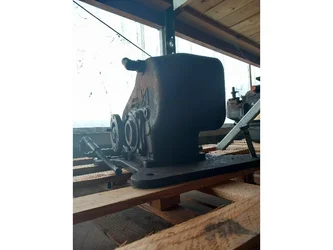
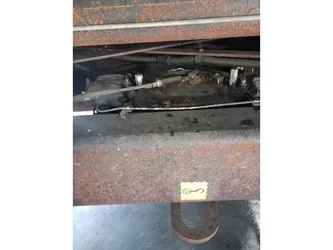
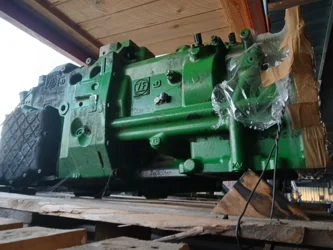
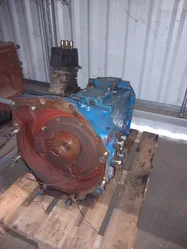
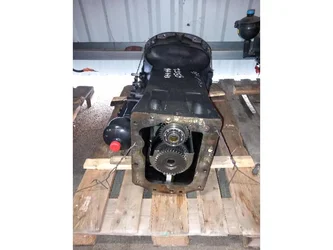
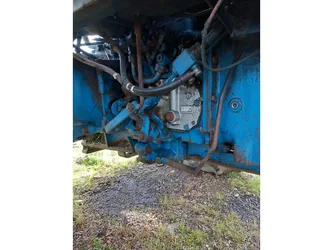
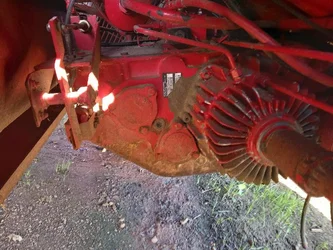
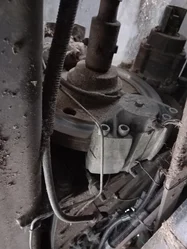
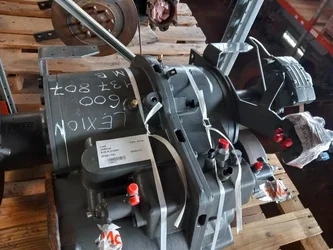
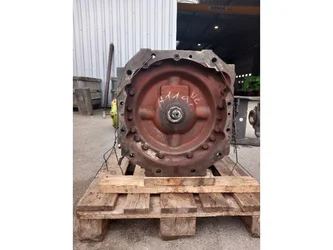
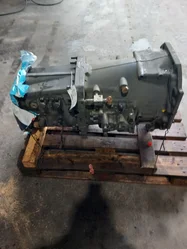
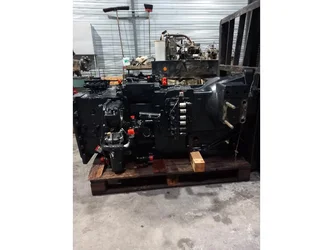
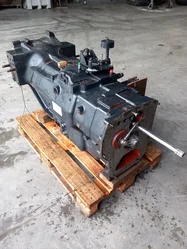
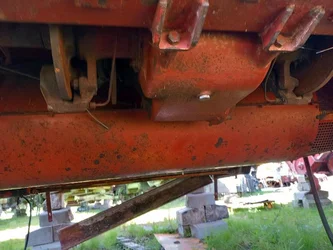
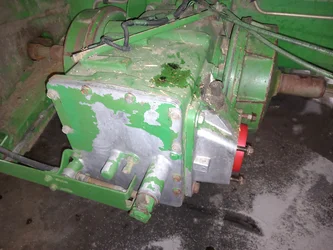
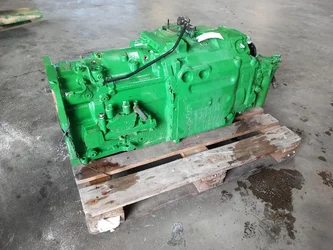
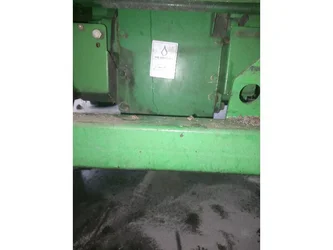
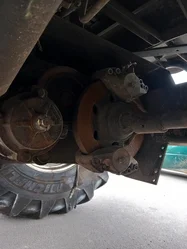
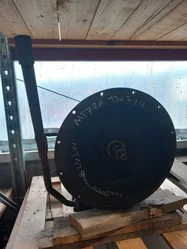
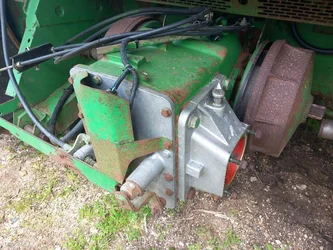
A faulty gearbox can bring the entire machine to a halt, often at the worst time in the season. TMC Bejenne removes these assemblies from agricultural tractors and combine harvesters sourced from dismantling operations at its workshops in Naintré, in the Vienne region. They are inspected and tested before being returned to stock. This category includes complete used gearboxes, with traceability to the original machine. It is part of our used transmission range, alongside gearbox parts.
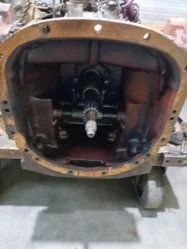
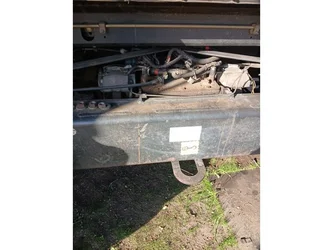
![Complete Gearbox for FIAT 566]()
Complete Gearbox for FIAT 566
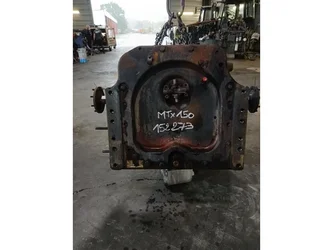
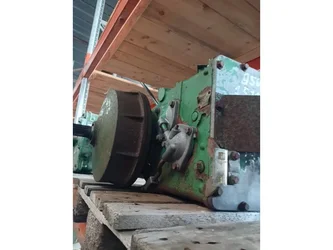
In stock, deliverable within 2-3 daysGet a quote![Complete Gearbox for MCCORMICK MTX 150]()
Complete Gearbox for MCCORMICK MTX 150
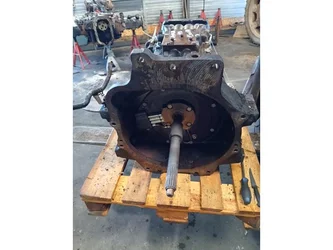
In stock, deliverable within 2-3 daysGet a quote![Complete Gearbox for CASE IH MAXXUM 115]()
Complete Gearbox for CASE IH MAXXUM 115
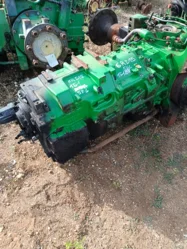
In stock, deliverable within 2-3 daysGet a quote![Complete Gearbox for JOHN-DEERE 6215 R]()
Complete Gearbox for JOHN-DEERE 6215 R
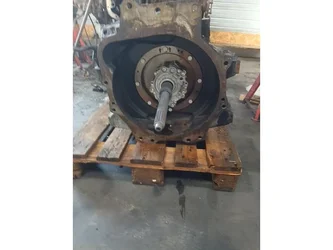
In stock, deliverable within 2-3 daysGet a quote![Complete Gearbox for NEW-HOLLAND CR 8080]()
Complete Gearbox for NEW-HOLLAND CR 8080
In stock, deliverable within 2-3 daysGet a quote![Complete Gearbox for JOHN-DEERE 9560 WTS]()
Complete Gearbox for JOHN-DEERE 9560 WTS
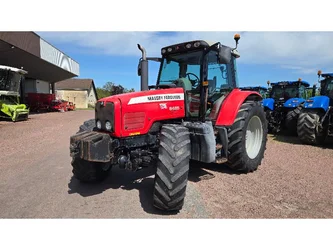
In stock, deliverable within 2-3 daysGet a quote![Complete Gearbox for MASSEY FERGUSON 6465]()
Complete Gearbox for MASSEY FERGUSON 6465
In stock, deliverable within 2-3 daysGet a quote![Complete Gearbox for NEW-HOLLAND T6.145]()
Complete Gearbox for NEW-HOLLAND T6.145
In stock, deliverable within 2-3 daysGet a quote![Complete Gearbox for MERLO P38.10]()
Complete Gearbox for MERLO P38.10
In stock, deliverable within 2-3 daysGet a quote![Complete Gearbox for NEW-HOLLAND CR 960]()
Complete Gearbox for NEW-HOLLAND CR 960
In stock, deliverable within 2-3 daysGet a quote![Complete Gearbox for NEW-HOLLAND CR 980]()
Complete Gearbox for NEW-HOLLAND CR 980
In stock, deliverable within 2-3 daysGet a quote![Complete Gearbox for JOHN-DEERE 6250 R]()
Complete Gearbox for JOHN-DEERE 6250 R
In stock, deliverable within 2-3 daysGet a quote![Complete gearbox for FORD 6640]()
Complete gearbox for FORD 6640
In stock, deliverable within 2-3 daysGet a quote![Complete gearbox for NEW-HOLLAND CX 820]()
Complete gearbox for NEW-HOLLAND CX 820
In stock, deliverable within 2-3 daysGet a quote![Complete gearbox for NEW-HOLLAND T5050]()
Complete gearbox for NEW-HOLLAND T5050
In stock, deliverable within 2-3 daysGet a quote![Complete gearbox for JOHN-DEERE 9780 CTS]()
Complete gearbox for JOHN-DEERE 9780 CTS
In stock, deliverable within 2-3 daysGet a quote![Complete gearbox for JOHN-DEERE 9780 CTS]()
Complete gearbox for JOHN-DEERE 9780 CTS
In stock, deliverable within 2-3 daysGet a quote![Complete gearbox for FIAT F100]()
Complete gearbox for FIAT F100
In stock, deliverable within 2-3 daysGet a quote![Complete gearbox for JOHN-DEERE 6115 R]()
Complete gearbox for JOHN-DEERE 6115 R
In stock, deliverable within 2-3 daysGet a quote![Complete gearbox for CASE IH 845]()
Complete gearbox for CASE IH 845
In stock, deliverable within 2-3 daysGet a quote![Complete gearbox for FORD 4610]()
Complete gearbox for FORD 4610
In stock, deliverable within 2-3 daysGet a quote![Complete gearbox for CASE IH AXIAL-FLOW 2388]()
Complete gearbox for CASE IH AXIAL-FLOW 2388
In stock, deliverable within 2-3 daysGet a quote![Complete gearbox for NEW-HOLLAND CX 860]()
Complete gearbox for NEW-HOLLAND CX 860
In stock, deliverable within 2-3 daysGet a quote![Complete gearbox for NEW-HOLLAND CR 980]()
Complete gearbox for NEW-HOLLAND CR 980
In stock, deliverable within 2-3 daysGet a quote![Complete gearbox for CLAAS LEXION 600]()
Complete gearbox for CLAAS LEXION 600
In stock, deliverable within 2-3 daysGet a quote![Complete gearbox for CLAAS ARES 556]()
Complete gearbox for CLAAS ARES 556
In stock, deliverable within 2-3 daysGet a quote![Complete gearbox for MASSEY FERGUSON 6612]()
Complete gearbox for MASSEY FERGUSON 6612
In stock, deliverable within 2-3 daysGet a quote![Complete gearbox for DEUTZ FAHR 6150]()
Complete gearbox for DEUTZ FAHR 6150
In stock, deliverable within 2-3 daysGet a quote![Complete gearbox for DEUTZ FAHR 6150]()
Complete gearbox for DEUTZ FAHR 6150
In stock, deliverable within 2-3 daysGet a quote![Complete gearbox for LAVERDA L626]()
Complete gearbox for LAVERDA L626
In stock, deliverable within 2-3 daysGet a quote![Complete gearbox for JOHN-DEERE CTS]()
Complete gearbox for JOHN-DEERE CTS
In stock, deliverable within 2-3 daysGet a quote![Complete gearbox for JOHN-DEERE 6155 R]()
Complete gearbox for JOHN-DEERE 6155 R
In stock, deliverable within 2-3 daysGet a quote![Complete gearbox for JOHN-DEERE S660]()
Complete gearbox for JOHN-DEERE S660
In stock, deliverable within 2-3 daysGet a quote![Complete gearbox for NEW-HOLLAND CX 8050]()
Complete gearbox for NEW-HOLLAND CX 8050
In stock, deliverable within 2-3 daysGet a quote![Complete gearbox for MANITOU MT 728]()
Complete gearbox for MANITOU MT 728
In stock, deliverable within 2-3 daysGet a quote![Complete gearbox for JOHN-DEERE 9780 CTS]()
Complete gearbox for JOHN-DEERE 9780 CTS
In stock, deliverable within 2-3 daysGet a quote
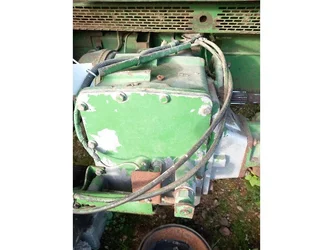
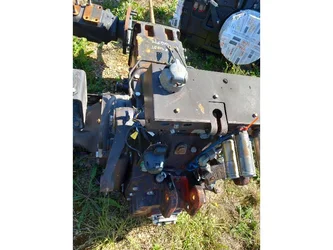
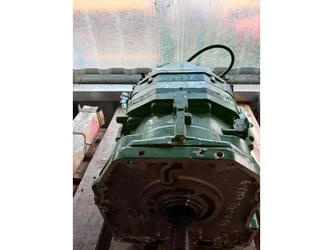
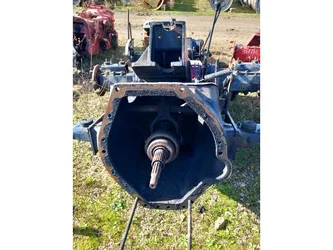
How a Tractor Gearbox Works
The gearbox’s role is to connect the engine to the working components by adjusting torque and travel speed. The input shaft receives motion from the clutch at engine speed, transfers it to gear trains, then the output shaft delivers it to the axle. Internal parts such as gears, sliders, synchronizers, forks, and bearings continuously operate submerged in oil. Design varies greatly between manufacturers, but the basic principle is the same for all agricultural gearboxes.
How to Change Gears on a Tractor?
With a standard gearbox, changing gear requires fully disengaging the clutch, selecting the gear with the lever, then gradually re-engaging the clutch. Shifting under load is possible only with gearboxes equipped with powershift. Reverse is engaged either via a dedicated lever or a mechanical or hydraulic reverser, much used during loader work. Difficulty or noise when shifting often signals wear.
Types of Agricultural Tractor Gearboxes
- Mechanical gearboxes with slider or synchronized gears: simple, robust, and easy to maintain.
- Semi-powershift gearboxes, allowing some gear changes under load without clutching.
- Full powershift gearboxes, where all gears shift under load.
- Continuously Variable Transmissions (CVT), replacing fixed gears with a continuous speed range.
- Hydrostatic gearboxes, mainly found on handling equipment and small machines.
Additional features such as gear doubling systems are marketed under unique names from each manufacturer. Proper operation depends as much on design as on the working conditions imposed on the machine.
Powershift Tractor Gearboxes
Powershift transmissions have gradually replaced mechanical gearboxes on high-power agricultural tractors. They enable seamless shifting under load without torque interruption thanks to multi-plate clutches controlled hydraulically. A John Deere powershift gearbox, like others, requires the correct oil and regular maintenance: even slight inadequate lubrication quickly damages the clutch plates.
CVT Continuously Variable Transmission
The CVT combines hydrostatic and mechanical components to vary travel speed seamlessly. Highly reliant on its control unit and sensors, a used CVT transmission must be selected strictly according to the original reference. Our technicians verify exact compatibility with your serial number before any offer.
Tractor Use and Appropriate Transmission
- Heavy plowing and traction: robust mechanical or powershift gearbox with good low-speed ratios.
- Front loader and handling: hydraulic reverser, powershift, or CVT for rapid direction changes.
- Road transport: powershift or CVT, optimizing engine power at high speed.
- Specialized work: creep gears for very slow operating speeds.
- Replacement: the used gearbox must be identical to the original, whatever the usage.
How Many Gears Does a Tractor Have?
There is no single answer. Entry-level tractors may have about ten forward gears and a few reverse, while recent high-power models often exceed thirty gear combinations including ranges and half-steps. CVTs offer a continuous speed range. The key factor is not the number of gears, but their spread according to the tasks performed: well-spaced low gears for heavy traction, rapid reversals for loader work.
Gearbox Diagram: A Diagnostic Tool
Before any repair, the manufacturer's schematic remains the reference: it identifies the input shaft, gear trains, lubrication points, and disassembly order of internal components. Manufacturers provide these diagrams in their service manuals. Without them, gearbox reassembly is risky and specialized advice from an agricultural mechanic is recommended.
Tractor Gearbox Oil: Regular Maintenance First
Which Oil to Use for a Tractor Gearbox?
Specifications depend on the manufacturer and model: some machines require dedicated transmission oil, others use a common oil for transmission, axle, and hydraulic system. Always consult the maintenance manual rather than generic advice. Checking oil level, timely changes, and filter replacements form the basis of effective regular maintenance.
Repair and Maintenance of Tractor Gearboxes: When to Be Concerned?
- Clicking noises or whistles varying with engine speed.
- Stiff or imprecise gear changes, or slipping gears.
- Difficulty engaging gears, slipping under load.
- Metal shavings in oil or on the magnetic plug.
- Unexpected tractor stall, blocked transmission.
Depending on damage severity, repair may be limited to replacing a gear set available among our used gearbox parts. When the housing or several shafts are affected, exchanging for a complete used gearbox is often quicker and more economical. Simple precautions significantly extend gearbox life: avoid forcing gear shifts, let oil warm up before heavy work, adjust the clutch, and check oil level after each major campaign.
Used Gearboxes Available at TMC Bejenne
Our inventory covers complete gearboxes for combine harvesters, agricultural tractors, and telescopic handlers. Each part is linked to the brand and tractor models it came from, indicated in its description. Most represented brands include:
- New Holland, Case IH, John Deere, and Claas.
- Deutz-Fahr, Massey Ferguson, and Laverda.
- Fiat, JCB, and Manitou, including gearboxes from telescopic handlers.
- Also Ford, Merlo, Renault, Same, Fendt, Valmet, Valtra, McCormick, Kubota, and David Brown, subject to availability.
Renault, John Deere and Other Brands’ Tractor Gearboxes
Looking for a specific Renault or John Deere tractor gearbox? Filters by "machine brand" and "machine model" allow you to specify down to the exact type. Many tractor models receive gearboxes made by suppliers, with the reference stamped on the housing: this determines compatibility alongside the tractor’s serial number.
Agricultural Tractor Transmission: Related Parts
A gearbox is never replaced alone. Remember to check the clutch, gearbox parts, power take-off shaft, and belts. These are all part of the transmission range, complemented by the rear axle and front axle ranges, the differential, and the power take-off family.
Ordering Your Gearbox from TMC Bejenne
Since 1945, TMC Bejenne has dismantled agricultural equipment and stocks over 25,000 references on its 11-hectare site. Each gearbox is inspected and tested before shipment. Each product page includes a "Request a Quote" button; our specialized technicians are available at +33 5 35 54 42 10 to check compatibility with your machine before shipping.
A gear that slips, a crunch when shifting, difficulty engaging reverse, slipping under load, a dull noise changing with engine speed, metal shavings in the oil or on the magnetic plug, or a persistent leak at the housing. At the first sign, have the gearbox checked before damage spreads to the shafts and housing requiring a complete exchange.
The cost depends on the cause, gearbox type, and workshop time. Replacing a gear or synchronizer is limited, but a fully disassembled powershift or CVT gearbox is a major repair. In such cases, exchanging for a complete used gearbox is often more economical. TMC Bejenne sells by quote: call +33 5 35 54 42 10 with your gearbox reference.
It is very often recommended. Since the gearbox is removed, the clutch is directly accessible, and reinstalling worn components risks redoing the job soon after. Also have the release bearing and flywheel checked.
Note the exact tractor model, serial number, transmission type, and the reference stamped on the gearbox housing. Two visually identical tractor models may have different gearboxes depending on year or options. For a Renault tractor or others, also specify maintenance history if known. With this information and a photo of the plate, our technicians confirm compatibility before shipping.
Can't find the part you're looking for?
Fill out this form or contact us at 05 86 24 00 26