
Used chopper rotor
64 available products
Overlong chopped straw, vibrations felt inside the cab, a bearing overheating at the rear of the machine: the chopper rotor runs at high speed and shows signs of wear. TMC Bejenne removes chopper rotors from combine harvesters entering deconstruction at Naintré, inspects them in the workshop, and offers them at reduced prices within the combine harvester chopper range. Each rotor is linked to its original machine: brand, model, and year.
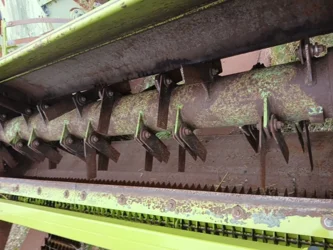
![Straw chopper rotor for CLAAS LEXION 440]()
Straw chopper rotor for CLAAS LEXION 440
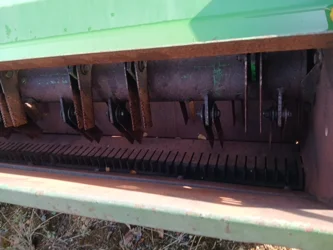
In stock, deliverable within 2-3 daysGet a quote![Straw chopper rotor for JOHN-DEERE 9560 WTS]()
Straw chopper rotor for JOHN-DEERE 9560 WTS
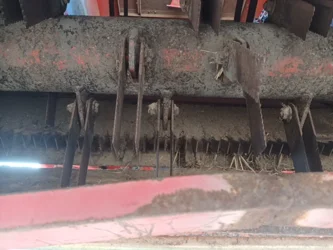
In stock, deliverable within 2-3 daysGet a quote![Straw chopper rotor for LAVERDA 2350]()
Straw chopper rotor for LAVERDA 2350
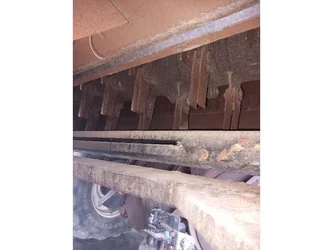
In stock, deliverable within 2-3 daysGet a quote![Straw chopper rotor for NEW-HOLLAND CR 980]()
Straw chopper rotor for NEW-HOLLAND CR 980
In stock, deliverable within 2-3 daysGet a quote![Straw chopper rotor for CLAAS LEXION 450]()
Straw chopper rotor for CLAAS LEXION 450
In stock, deliverable within 2-3 daysGet a quote![Straw chopper rotor for CLAAS LEXION 540]()
Straw chopper rotor for CLAAS LEXION 540
In stock, deliverable within 2-3 daysGet a quote![Straw chopper rotor for CLAAS LEXION 570]()
Straw chopper rotor for CLAAS LEXION 570
In stock, deliverable within 2-3 daysGet a quote![Straw chopper rotor for CLAAS LEXION 600]()
Straw chopper rotor for CLAAS LEXION 600
In stock, deliverable within 2-3 daysGet a quote![Straw chopper rotor for NEW-HOLLAND TX 66]()
Straw chopper rotor for NEW-HOLLAND TX 66
In stock, deliverable within 2-3 daysGet a quote![Straw chopper rotor for NEW-HOLLAND CX 8090]()
Straw chopper rotor for NEW-HOLLAND CX 8090
In stock, deliverable within 2-3 daysGet a quote![Straw chopper rotor for NEW-HOLLAND CX 820]()
Straw chopper rotor for NEW-HOLLAND CX 820
In stock, deliverable within 2-3 daysGet a quote![Straw chopper rotor for JOHN-DEERE 9780 CTS]()
Straw chopper rotor for JOHN-DEERE 9780 CTS
In stock, deliverable within 2-3 daysGet a quote![Straw chopper rotor for NEW-HOLLAND CX 8080]()
Straw chopper rotor for NEW-HOLLAND CX 8080
In stock, deliverable within 2-3 daysGet a quote![Straw chopper rotor for NEW-HOLLAND CX 880]()
Straw chopper rotor for NEW-HOLLAND CX 880
In stock, deliverable within 2-3 daysGet a quote![Straw chopper rotor for NEW-HOLLAND TX 67]()
Straw chopper rotor for NEW-HOLLAND TX 67
In stock, deliverable within 2-3 daysGet a quote![Straw chopper rotor for NEW-HOLLAND CX 820]()
Straw chopper rotor for NEW-HOLLAND CX 820
In stock, deliverable within 2-3 daysGet a quote![Straw chopper rotor for NEW-HOLLAND CR 8080]()
Straw chopper rotor for NEW-HOLLAND CR 8080
In stock, deliverable within 2-3 daysGet a quote![Straw chopper rotor for JOHN-DEERE CTS]()
Straw chopper rotor for JOHN-DEERE CTS
In stock, deliverable within 2-3 daysGet a quote![Straw chopper rotor for CASE IH AXIAL-FLOW 2388]()
Straw chopper rotor for CASE IH AXIAL-FLOW 2388
In stock, deliverable within 2-3 daysGet a quote![Straw chopper rotor for CASE IH AXIAL-FLOW 2388]()
Straw chopper rotor for CASE IH AXIAL-FLOW 2388
In stock, deliverable within 2-3 daysGet a quote![Straw chopper rotor for NEW-HOLLAND CR 960]()
Straw chopper rotor for NEW-HOLLAND CR 960
In stock, deliverable within 2-3 daysGet a quote![Straw chopper rotor for NEW-HOLLAND CR 960]()
Straw chopper rotor for NEW-HOLLAND CR 960
In stock, deliverable within 2-3 daysGet a quote![Straw chopper rotor for JOHN-DEERE 9780 CTS]()
Straw chopper rotor for JOHN-DEERE 9780 CTS
In stock, deliverable within 2-3 daysGet a quote![Straw chopper rotor for NEW-HOLLAND TX 66]()
Straw chopper rotor for NEW-HOLLAND TX 66
In stock, deliverable within 2-3 daysGet a quote![Straw chopper rotor for NEW-HOLLAND CX 760]()
Straw chopper rotor for NEW-HOLLAND CX 760
In stock, deliverable within 2-3 daysGet a quote![Straw chopper rotor for CLAAS LEXION 420]()
Straw chopper rotor for CLAAS LEXION 420
In stock, deliverable within 2-3 daysGet a quote![Straw chopper rotor for CASE IH 2188]()
Straw chopper rotor for CASE IH 2188
In stock, deliverable within 2-3 daysGet a quote![Straw chopper rotor for NEW-HOLLAND CR 980]()
Straw chopper rotor for NEW-HOLLAND CR 980
In stock, deliverable within 2-3 daysGet a quote![Straw chopper rotor for CASE IH AXIAL-FLOW 6088]()
Straw chopper rotor for CASE IH AXIAL-FLOW 6088
In stock, deliverable within 2-3 daysGet a quote![Straw chopper rotor for JOHN-DEERE 9580 WTS]()
Straw chopper rotor for JOHN-DEERE 9580 WTS
In stock, deliverable within 2-3 daysGet a quote![Straw chopper rotor for NEW-HOLLAND CR 9080]()
Straw chopper rotor for NEW-HOLLAND CR 9080
In stock, deliverable within 2-3 daysGet a quote![Straw chopper rotor for NEW-HOLLAND CR 9080]()
Straw chopper rotor for NEW-HOLLAND CR 9080
In stock, deliverable within 2-3 daysGet a quote![Straw chopper rotor for NEW-HOLLAND TX 68]()
Straw chopper rotor for NEW-HOLLAND TX 68
In stock, deliverable within 2-3 daysGet a quote![Straw chopper rotor for CASE IH AXIAL-FLOW 2166]()
Straw chopper rotor for CASE IH AXIAL-FLOW 2166
In stock, deliverable within 2-3 daysGet a quote![Straw chopper rotor for CLAAS LEXION 760]()
Straw chopper rotor for CLAAS LEXION 760
In stock, deliverable within 2-3 daysGet a quote![Straw chopper rotor for NEW-HOLLAND TF 78]()
Straw chopper rotor for NEW-HOLLAND TF 78
In stock, deliverable within 2-3 daysGet a quote

Role of the rotor in the chopper's cutting system
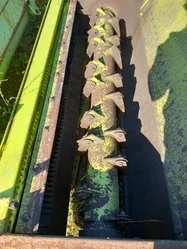
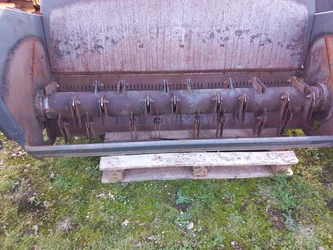
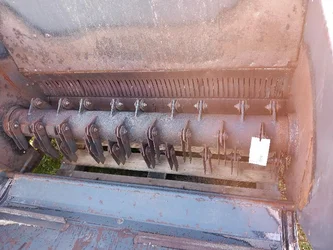
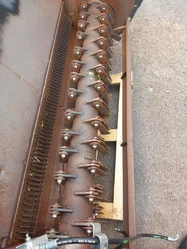
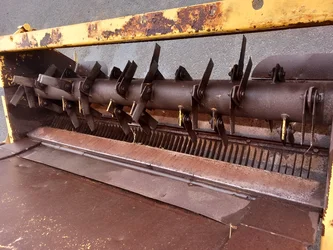
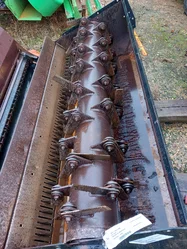
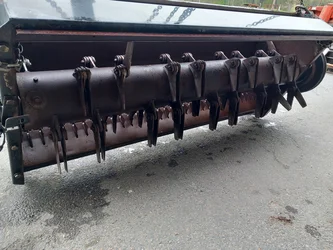
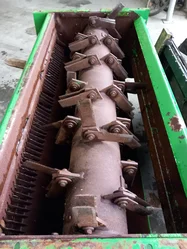
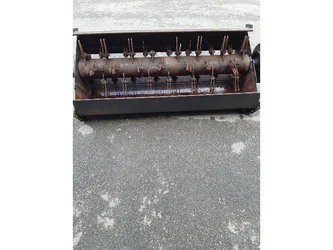
At the rear of the combine harvester, straw exiting the straw walkers or threshing rotor falls into the chopper. The rotor, a shaft fitted with articulated hammers or knives, spins at high speed within the housing. Alongside fixed counter-knives, it forms the cutting system: each hammer throws the straw against the blades, chopping it into short pieces, then deflectors spread the chopped straw evenly across the cutting width. A worn rotor degrades the entire chopper cutting system: straw is poorly chopped, forms uneven windrows, and hinders the following soil work.
Hammer or knife chopper rotor: two configurations
- Oscillating hammer rotor: steel hammers articulated on axes that retract when hitting foreign objects.
- Knife rotor: thin blades mounted in pairs for finer chopping of cereal straw.
- Number of hammer, knife, and counter-knife rows varies according to cutting width.
- Hammers and knives are wear parts: used rotors are often refitted with a new set.
- Rotor speed is adjusted via the pulley or variator depending on the crop, cereals or maize.
Rotor balancing: vibrations, unbalance and wear
The chopper rotor spins at several thousand revolutions per minute: even slight unbalance causes vibrations that wear bearings, crack the housing, and strain the drive. A lost hammer, broken knife, or warped shaft caused by a stone are enough to unbalance the rotor. When replacing hammers, swap them in opposing pairs of equal weight to maintain rotor balance and cutting system efficiency. Before sale, our technicians verify shaft straightness, hammer pins, and bearing seats: warped rotors are not resold.
TMC Bejenne: chopper rotors for Claas, New Holland, John Deere, Case IH
- Claas: chopper rotors for Lexion 600 and 760 models, and older Dominators.
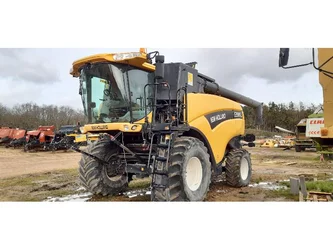
- New Holland: rotors for TF, TX, CX and CR series, for both walkers and rotor harvesters.
- John Deere: rotors for 9580 WTS, 9780 CTS, S660, and older series.
- Case IH: chopper rotors for Axial-Flow 1660, 2166 and 6088.
- Since 1945, TMC Bejenne dismantles agricultural machinery over a 11-hectare site and offers 25,000 references of used parts.
Rotor alone or complete chopper?
If only the rotor is faulty, a checked used rotor is sufficient: it mounts into the existing housing with its bearings. If the housing is deformed, the chopper clutch slips, or the mounts are damaged, consider a used complete chopper already assembled. The chopper housing is also available separately. In all cases, plan for wear spare parts—hammers, knives, and counter-knives—when acquiring the rotor: dismantling is done only once.
Chopper rotor, brush cutter rotor, or threshing rotor: do not confuse
- Brush cutter and flail mower rotors: tractor-attached tools driven by the PTO, used for hedge and roadside maintenance.
- Gyro mower: horizontal blades driven by the PTO, unrelated to straw choppers.
- Threshing rotor: main rotor in rotor-type combine harvesters like Axial-Flow, which threshes and separates grain.
- Combine chopper rotor: rear-mounted, belt-driven from the machine, not by PTO; the subject of this page.
Compatibility, pickup and delivery options
To find the right rotor, note the brand, model and serial number of the combine, chopper width, number of hammer or knife rows, and shaft diameter at the bearings. A photo of the pulley-side end aids in verifying the drive. On a Laverda as on a Claas, two versions of the same series may have different rotors. Pickup is onsite in Naintré; delivery anywhere in France is available on request, priced according to rotor length.
On a combine harvester, the chopper always has a rotor: the choice lies in the type of tools it carries. Oscillating hammers handle stones and thick stalks better, such as in maize or sunflower. Knives provide finer chopping of cereal straw. When in doubt, keep your machine's original setup.
Not if it’s refitted with a full set of hammers or knives of equal weight. Workshop balancing is justified after straightening a shaft or if vibrations persist once the rotor is mounted. Also check the bearings, as they are often the cause of vibrations attributed to the rotor.
From a specialist in used spare parts who dismantles combines themselves, like TMC Bejenne: each rotor comes from an identified machine and is inspected before sale. Request a quote from the product sheet or call 05 86 24 00 26: our advisors verify compatibility with your combine, whether John Deere, New Holland, or others.
Can't find the part you're looking for?
Fill out this form or contact us at 05 86 24 00 26