
Used Hydraulic Distributors for Tractors & Combines
41 available products
A faulty hydraulic distributor can immobilize your tractor at the worst possible time. Loss of control over the front loader, un unresponsive lift, or an attached implement stuck in the lowered position—these issues have an immediate impact on your operation. TMC Bejenne offers a wide stock of used hydraulic distributors for tractors and agricultural machinery, sourced from carefully dismantled equipment. You’ll find single-acting and double-acting models, monoblock or modular distributors, manual or electrohydraulic, compatible with major machinery brands. Each part is inspected in our workshop before shipment: checked for leaks, spool play within limits, and clean fittings. Available immediately at prices significantly below new parts. Explore all our components in the hydraulics range, alongside hydraulic pumps, cylinders, and hydraulic motors.
![Hydraulic distributor for CASE IH AXIAL-FLOW 8010]()
Hydraulic distributor for CASE IH AXIAL-FLOW 8010
In stock, deliverable within 2-3 daysGet a quote![Hydraulic distributor for CASE IH AXIAL-FLOW 8010]()
Hydraulic distributor for CASE IH AXIAL-FLOW 8010
In stock, deliverable within 2-3 daysGet a quote![Hydraulic distributor for JOHN-DEERE 6150 R]()
Hydraulic distributor for JOHN-DEERE 6150 R
In stock, deliverable within 2-3 daysGet a quote![Hydraulic distributor for JOHN-DEERE 6155 R]()
Hydraulic distributor for JOHN-DEERE 6155 R
In stock, deliverable within 2-3 daysGet a quote![Hydraulic distributor for JOHN-DEERE 6120 M]()
Hydraulic distributor for JOHN-DEERE 6120 M
In stock, deliverable within 2-3 daysGet a quote![Hydraulic distributor for CASE IH CVX 130]()
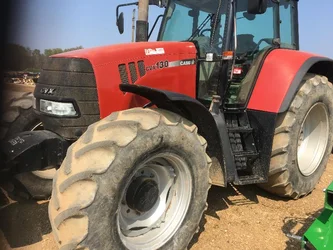
Hydraulic distributor for CASE IH CVX 130
In stock, deliverable within 2-3 daysGet a quote![Hydraulic distributor for DEUTZ FAHR AGROTRON K 420]()
Hydraulic distributor for DEUTZ FAHR AGROTRON K 420
In stock, deliverable within 2-3 daysGet a quote![Hydraulic distributor for MASSEY FERGUSON 7485]()
Hydraulic distributor for MASSEY FERGUSON 7485
In stock, deliverable within 2-3 daysGet a quote![Hydraulic distributor for NEW-HOLLAND TX 66]()
Hydraulic distributor for NEW-HOLLAND TX 66
In stock, deliverable within 2-3 daysGet a quote![Hydraulic distributor for NEW-HOLLAND CX 880]()
Hydraulic distributor for NEW-HOLLAND CX 880
In stock, deliverable within 2-3 daysGet a quote![Hydraulic Distributor for CASE IH AXIAL-FLOW 2388]()
Hydraulic Distributor for CASE IH AXIAL-FLOW 2388
In stock, deliverable within 2-3 daysGet a quote![Hydraulic distributor for CASE IH AXIAL-FLOW 2388]()
Hydraulic distributor for CASE IH AXIAL-FLOW 2388
In stock, deliverable within 2-3 daysGet a quote![Hydraulic distributor for CASE IH AXIAL-FLOW 2388]()
Hydraulic distributor for CASE IH AXIAL-FLOW 2388
In stock, deliverable within 2-3 daysGet a quote![Hydraulic distributor for CLAAS LEXION 570]()
Hydraulic distributor for CLAAS LEXION 570
In stock, deliverable within 2-3 daysGet a quote![Hydraulic distributor for NEW-HOLLAND TX 68]()
Hydraulic distributor for NEW-HOLLAND TX 68
In stock, deliverable within 2-3 daysGet a quote![Hydraulic distributor for JOHN-DEERE 6115 R]()
Hydraulic distributor for JOHN-DEERE 6115 R
In stock, deliverable within 2-3 daysGet a quote![Hydraulic distributor for CASE IH AXIAL-FLOW 2388]()
Hydraulic distributor for CASE IH AXIAL-FLOW 2388
In stock, deliverable within 2-3 daysGet a quote![Hydraulic distributor for CLAAS LEXION 600]()
Hydraulic distributor for CLAAS LEXION 600
In stock, deliverable within 2-3 daysGet a quote![Hydraulic distributor for CLAAS LEXION 600]()
Hydraulic distributor for CLAAS LEXION 600
In stock, deliverable within 2-3 daysGet a quote![Hydraulic distributor for JOHN-DEERE 6810]()
Hydraulic distributor for JOHN-DEERE 6810
In stock, deliverable within 2-3 daysGet a quote![Hydraulic distributor for CASE IH PUMA 160 CVX]()
Hydraulic distributor for CASE IH PUMA 160 CVX
In stock, deliverable within 2-3 daysGet a quote![Hydraulic distributor for JOHN-DEERE 6920]()
Hydraulic distributor for JOHN-DEERE 6920
In stock, deliverable within 2-3 daysGet a quote![Hydraulic distributor for JOHN-DEERE 6140 M]()
Hydraulic distributor for JOHN-DEERE 6140 M
In stock, deliverable within 2-3 daysGet a quote![Hydraulic distributor for CASE IH CVX 130]()
Hydraulic distributor for CASE IH CVX 130
In stock, deliverable within 2-3 daysGet a quote![Hydraulic distributor for JOHN-DEERE 6610]()
Hydraulic distributor for JOHN-DEERE 6610
In stock, deliverable within 2-3 daysGet a quote![Hydraulic distributor for NEW-HOLLAND TX 66]()
Hydraulic distributor for NEW-HOLLAND TX 66
In stock, deliverable within 2-3 daysGet a quote![Hydraulic distributor for CASE IH AXIAL-FLOW 2388]()
Hydraulic distributor for CASE IH AXIAL-FLOW 2388
In stock, deliverable within 2-3 daysGet a quote![Hydraulic distributor for JOHN-DEERE S660]()
Hydraulic distributor for JOHN-DEERE S660
In stock, deliverable within 2-3 daysGet a quote![Hydraulic distributor for CLAAS LEXION 760]()
Hydraulic distributor for CLAAS LEXION 760
In stock, deliverable within 2-3 daysGet a quote![Hydraulic distributor for CLAAS LEXION 760]()
Hydraulic distributor for CLAAS LEXION 760
In stock, deliverable within 2-3 daysGet a quote![Hydraulic distributor for CASE IH AXIAL-FLOW 2166]()
Hydraulic distributor for CASE IH AXIAL-FLOW 2166
In stock, deliverable within 2-3 daysGet a quote![Hydraulic distributor for CASE IH AXIAL-FLOW 2188]()
Hydraulic distributor for CASE IH AXIAL-FLOW 2188
In stock, deliverable within 2-3 daysGet a quote![Hydraulic distributor for CLAAS LEXION 600]()
Hydraulic distributor for CLAAS LEXION 600
In stock, deliverable within 2-3 daysGet a quote![Hydraulic distributor for NEW-HOLLAND TX 64]()
Hydraulic distributor for NEW-HOLLAND TX 64
In stock, deliverable within 2-3 daysGet a quote![Hydraulic distributor for JOHN-DEERE 1188]()
Hydraulic distributor for JOHN-DEERE 1188
In stock, deliverable within 2-3 daysGet a quote![Hydraulic distributor for CLAAS LEXION 460]()
Hydraulic distributor for CLAAS LEXION 460
In stock, deliverable within 2-3 daysGet a quote

Agricultural Hydraulic Distributor: Single or Double Acting
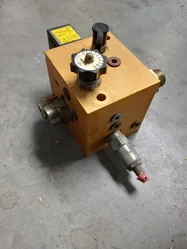
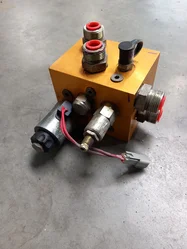
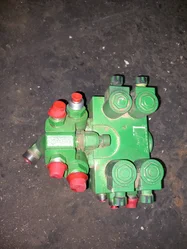
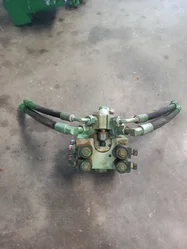
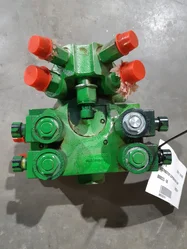
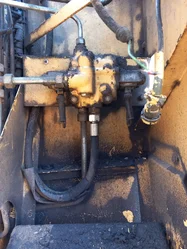
The hydraulic distributor is the central component managing the hydraulic circuit on your tractor. Its role: to direct pressurized oil flow from the hydraulic pump to the actuators (cylinders, hydraulic motors) and control their movement direction. A single-acting distributor supplies oil to one cylinder chamber, with the return made via spring or gravity. The double-acting distributor, more common on modern tractors, alternately directs oil to both chambers, enabling precise control in both directions. For multifunction applications, a hydraulic distributor block with multiple spools or a two-spool double-acting distributor is generally used. On recent machines, proportional or closed-center distributors adapted to Load-Sensing systems are also found. Each distributor is identifiable by its ISO standardized symbol on the tractor’s original hydraulic diagram, facilitating the selection of the correct replacement part.
Distributor Types: Circuits, Spools, and Designs
Before ordering a used distributor, here are some key points on available configurations:
- 2-way distributor: opens or closes a single flow path, used to control a single-acting actuator.
- 3-way distributor: manages flow between one supply and two distinct outlets, common in bypass circuits.
- 4-way (4/3) distributor: standard on most agricultural tractors, controls two chambers in opposite directions with a neutral position centered open or closed.
- Monoblock distributor: machined from a single piece for compactness and robustness, common on tractors up to the 1990s.
- Modular hydraulic distributor block: assembled from individual sections, each spool manages a function, easily expandable based on required circuits.
- Float position: available on some models, it allows the tool (blade, pallet lifter) to freely follow the ground without back pressure.
- Internal sliding spools: key wear component of the distributor; check for absence of scoring and excessive play before installation.
Electric Hydraulic Distributor: Remote-Controlled Used Units
Electric hydraulic distributors have become common on tractors equipped with electronic lifting and loader management systems. They receive commands by electric signals (12 V or 24 V) rather than manual levers, facilitating the installation of push-buttons in the cab or joystick controls. There are two main types: on/off electro-distributors and proportional distributors capable of modulating flow according to signal intensity. TMC Bejenne offers a stock of used electrohydraulic distributors from recent tractors, tested in our workshop on a pressure bench. Their condition is verified before shipping: coil sealing, connector integrity, internal valve responsiveness. For installations on micro-tractors or compact machinery, smaller 12 V models are available on request.
Connection and Installation: Flow, Pressure, and Fittings
Installing a hydraulic distributor requires precision and respect for your existing circuit’s specifications:
- Nominal flow: verify the distributor's flow capacity in liters per minute relative to your hydraulic pump’s flow; undersizing leads to pressure drops and jerky movements.
- Working pressure: the distributor's rated pressure must be equal to or higher than the maximum pressure in your circuit (generally 200 to 250 bar on standard agricultural tractors).
- Input and output ports: identify ports P (pump feed), T (tank return), and A/B (actuator outlets) before any connection.
- Hydraulic fitting compatibility: BSP or metric threads, hose diameters—check compatibility with your setup before fitting the used distributor.
- Required circuits: match the number of distributor circuits to the functions you need to operate on your tractor equipment (front loader, attached tool, auxiliary distributor).
- Distributor installation: purge the circuit after installation, run the pump at low speed before applying load, check for leaks at fittings and inside the body.
Hydraulic Distributors Available at TMC Bejenne: All Brands
Since 1945, TMC Bejenne has dismantled and inspected thousands of tractors and agricultural machines. Our stock of used hydraulic distributors covers the entire French fleet: Massey Ferguson (series 3000, 5000, 6000, 7000), John Deere (series 6000, 7000, 8000), Case IH (Puma, Maxxum, MXM), New Holland (series T6, T7, T8), Renault (series Atles, Ares, Ceres), Fendt, Deutz-Fahr, and Kubota. Older generation Ford and Fiat tractors, whose distributors can be hard to find new, are also represented in our inventory. With over 25,000 references stored on 11 hectares in Naintré, we respond to 90% of requests at first contact. For distributor searches on specific models or older series, call our technicians at 05 86 24 00 26.
Adjustment and Diagnosis: Recognizing a Faulty Distributor
Signs of a hydraulic distributor failure are quickly identified in the field:
- Jerky movements of the cylinder or tool: sign of a worn spool or internal contamination by metallic particles.
- Loss of power in the hydraulic circuit: the distributor no longer holds pressure, and the safety valve constantly opens.
- External leaks around the body or fittings: deteriorated O-rings or cracked body.
- Abnormal noises (whistling, knocking) when actuated: cavitation or excessive play between spool and body interior.
- No response to commands: burnt coil on an electro-distributor, seized spool from oil shortages or contamination.
- Hydraulic distributor adjustment: on some models, stroke and cracking pressure are adjustable; if adjustment fails to correct the fault, replacement is recommended.
- Old distributor: TMC Bejenne can evaluate your faulty old distributor and guide you toward the appropriate replacement for your machine.
An agricultural hydraulic distributor is the hydraulic circuit component responsible for directing pressurized oil flow to actuators (cylinders, hydraulic motors) and controlling their direction of movement. Operated by a lever, joystick, or electrical signal, it controls all hydraulic equipment mounted on the tractor: front loader, lift, attached tools. It is available in single-acting, double-acting, manual, or electrohydraulic versions, monoblock or modular.
The main types are: single-acting distributor (one flow direction, return by spring or gravity), double-acting distributor (full control in both directions), and proportional distributor (fine modulation of flow). Architecturally: monoblock or modular (assembled section by section). Control types: manual (lever or direct spool), mechanical, or electrohydraulic (12 V or 24 V coil). The number of circuits (2, 3, 4, or more) determines available functions.
It directs oil supplied by the hydraulic pump to the cylinders of the front loader, lift, or attached tools and controls movement direction. Without a functioning distributor, no hydraulic equipment can be operated. The distributor also determines speed and force of movements according to its nominal flow and allowable working pressure within the tractor's hydraulic circuit.
First, identify ports P (pump supply), T (tank return), and A/B (actuator outputs). Verify that the distributor’s nominal flow and working pressure match your circuit. Check compatibility of hydraulic fittings (BSP or metric threads, hose diameters). Tighten fittings without over-tightening, purge the circuit at low speed checking for leaks, then test operation on the relevant actuator. For any installation difficulties, our technicians are available at 05 86 24 00 26.
Common signs include jerky or slow movements of the controlled cylinder, loss of power in the tool, visible oil leaks around the distributor body, abnormal noises (whistling, knocking) when operating, and complete lack of response to manual or electrical commands. A pressure test can confirm internal seal failure. If adjustment does not fix the problem, replacement is the most reliable solution.
Can't find the part you're looking for?
Fill out this form or contact us at 05 86 24 00 26