
Used Tractor Differential
42 available products
The differential is the component that allows the two drive wheels to rotate at different speeds while receiving engine torque. Its failure immobilizes the machine, and replacement with a new part is costly for high-power tractors. TMC Bejenne removes these assemblies from decommissioned tractors sourced from agricultural dismantling, the company’s farming salvage activity, inspects them in workshop, and individually lists them on its site in Naintré, Vienne. Each used tractor differential thus becomes part of our used rear axle range.
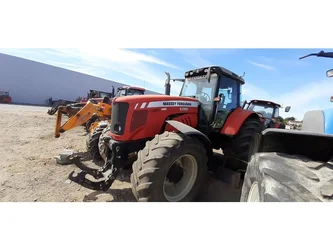
![Differential for MASSEY FERGUSON 6485]()
Differential for MASSEY FERGUSON 6485
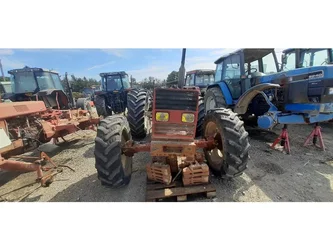
In stock, deliverable within 2-3 daysGet a quote![Differential for FIAT 880]()
Differential for FIAT 880
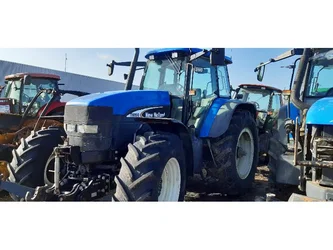
In stock, deliverable within 2-3 daysGet a quote![Differential for NEW-HOLLAND TM 190]()
Differential for NEW-HOLLAND TM 190
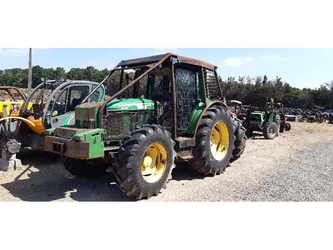
In stock, deliverable within 2-3 daysGet a quote![Differential for JOHN-DEERE 6430]()
Differential for JOHN-DEERE 6430
In stock, deliverable within 2-3 daysGet a quote![Differential for CASE IH MAXXUM 5120]()
Differential for CASE IH MAXXUM 5120
In stock, deliverable within 2-3 daysGet a quote![Differential for JOHN-DEERE 6250 R]()
Differential for JOHN-DEERE 6250 R
In stock, deliverable within 2-3 daysGet a quote![Differential for JOHN-DEERE 6115 R]()
Differential for JOHN-DEERE 6115 R
In stock, deliverable within 2-3 daysGet a quote![DIFFERENTIEL ARR]()
DIFFERENTIEL ARR
In stock, deliverable within 2-3 daysGet a quote![Differential for CLAAS ARION 620]()
Differential for CLAAS ARION 620
In stock, deliverable within 2-3 daysGet a quote![Differential for JOHN-DEERE 6400]()
Differential for JOHN-DEERE 6400
In stock, deliverable within 2-3 daysGet a quote![Differential for NEW-HOLLAND T8.390]()
Differential for NEW-HOLLAND T8.390
In stock, deliverable within 2-3 daysGet a quote![Differential for NEW-HOLLAND TG 255]()
Differential for NEW-HOLLAND TG 255
In stock, deliverable within 2-3 daysGet a quote![Differential for CASE IH MXM 175]()
Differential for CASE IH MXM 175
In stock, deliverable within 2-3 daysGet a quote![Differential for FIAT G190]()
Differential for FIAT G190
In stock, deliverable within 2-3 daysGet a quote![Differential for NEW-HOLLAND TM 155]()
Differential for NEW-HOLLAND TM 155
In stock, deliverable within 2-3 daysGet a quote![Differential for MASSEY FERGUSON 6140]()
Differential for MASSEY FERGUSON 6140
In stock, deliverable within 2-3 daysGet a quote![Differential for CASE IH PUMA 140]()
Differential for CASE IH PUMA 140
In stock, deliverable within 2-3 daysGet a quote![Differential for CLAAS AXOS 320]()
Differential for CLAAS AXOS 320
In stock, deliverable within 2-3 daysGet a quote![Differential for RENAULT ARES 826]()
Differential for RENAULT ARES 826
In stock, deliverable within 2-3 daysGet a quote![Differential for NEW-HOLLAND TL 90]()
Differential for NEW-HOLLAND TL 90
In stock, deliverable within 2-3 daysGet a quote![Differential for JOHN-DEERE 6310]()
Differential for JOHN-DEERE 6310
In stock, deliverable within 2-3 daysGet a quote![Differential for CASE IH CS 150]()
Differential for CASE IH CS 150
In stock, deliverable within 2-3 daysGet a quote![Differential for NEW-HOLLAND M115]()
Differential for NEW-HOLLAND M115
In stock, deliverable within 2-3 daysGet a quote![Differential for JOHN-DEERE 5720]()
Differential for JOHN-DEERE 5720
In stock, deliverable within 2-3 daysGet a quote![Differential for NEW-HOLLAND TN 80 F]()
Differential for NEW-HOLLAND TN 80 F
In stock, deliverable within 2-3 daysGet a quote![Differential for NEW-HOLLAND T6.155]()
Differential for NEW-HOLLAND T6.155
In stock, deliverable within 2-3 daysGet a quote![Differential for JOHN-DEERE 8130]()
Differential for JOHN-DEERE 8130
In stock, deliverable within 2-3 daysGet a quote![Differential for MASSEY FERGUSON 6270]()
Differential for MASSEY FERGUSON 6270
In stock, deliverable within 2-3 daysGet a quote![Differential for SAME ANTARES 130]()
Differential for SAME ANTARES 130
In stock, deliverable within 2-3 daysGet a quote![Differential for JOHN-DEERE 5500 N]()
Differential for JOHN-DEERE 5500 N
In stock, deliverable within 2-3 daysGet a quote![Differential for RENAULT 155-54]()
Differential for RENAULT 155-54
In stock, deliverable within 2-3 daysGet a quote![DIFFERENTIEL ARR]()
DIFFERENTIEL ARR
In stock, deliverable within 2-3 daysGet a quote![Differential for CASE IH MAXXUM 5140]()
Differential for CASE IH MAXXUM 5140
In stock, deliverable within 2-3 daysGet a quote![Differential for MASSEY FERGUSON 3050]()
Differential for MASSEY FERGUSON 3050
In stock, deliverable within 2-3 daysGet a quote![Differential for JOHN-DEERE 6420]()
Differential for JOHN-DEERE 6420
In stock, deliverable within 2-3 daysGet a quote![Differential for RENAULT ARES 815]()
Differential for RENAULT ARES 815
In stock, deliverable within 2-3 daysGet a quote

How the differential works: What is its purpose on a tractor?
The differential is a bevel gear mechanism housed in the rear axle, between the two half-shafts. It consists of a housing connected to the crown gear of the bevel set, inside which rotate planetary gears mounted on an axle, meshing with two bevel gears each linked to a half-shaft.
Without it, the two rear wheels would be locked together: in turns, the outer wheel, which travels a longer distance, would be forced to slip. Result: premature tire wear, torsional stress on the transmission, and soil damage. The differential automatically absorbs this speed difference without driver intervention and simultaneously protects the entire drivetrain. Thanks to the differential, power is distributed between the two drive wheels regardless of the trajectory.
Rear differential lock: What is it for and how to use it?
On challenging terrain, the differential’s normal operation becomes a disadvantage: torque naturally goes to the wheel with the least resistance, meaning the one slipping as soon as traction decreases. This is why agricultural tractors include a differential lock system— operated by pedal on older models, electrically or hydraulically controlled from the cab on newer machines. This system temporarily locks the two planetary gears together to regain traction.
Some rules ensure rear axle longevity:
- never engage the differential lock while turning: lateral forces directly stress the planetary gears and half-shafts;
- disengage immediately after leaving the difficult patch, as soon as normal traction is restored;
- keep speed very low; the lock is designed for work and crossing obstacles, not for travel;
- never use it on roads or hard ground where steering becomes unpredictable and torsional stresses are destructive.
Excessive use causes typical damage: broken teeth on planets, cracked housing, and sudden half-shaft failure. These faults happen unexpectedly, usually at the worst moment.
Rear axle faults and noise: signs of differential wear
Unlike sudden failure, gradual wear shows warning signs. Some symptoms indicate it's time to open the axle:
- a dull or whining noise under load, increasing with speed;
- a clicking on acceleration or deceleration, indicating excessive play between gears;
- vibrations felt at the rear of the machine;
- abnormal lateral play on the rear wheels;
- oil leaks at the rear axle housing;
- a tractor that "pulls" to one side when pulling.
Axle oil: the key to long service life
On most agricultural tractors, UTTO-type oil lubricates simultaneously the gearbox, rear axle, and hydraulic circuits. Therefore, the differential depends directly on the quality and level of this oil. Low level or degraded oil significantly accelerates wear of the planetary and bevel gears; untreated leaks lead to breakage. Checking oil level at each scheduled maintenance and replacing a faulty housing seal before reassembly remains the most cost-effective investment for this component.
Tractor differentials available at TMC Bejenne
All our differentials are taken from identified machines during dismantling at our facility. Below are examples of common original models, depending on arrivals:
- New Holland: M115, TL 90, TM 155, TM 190, TN 80 F, TG 255, TVT 170, T6.155, T8.390;
- John Deere: 5500 N, 5720, 6310, 6400, 6420, 6430, 6115 R, 6250 R, 8130;
- Case IH: CS 150, Maxxum 110, Maxxum 5120, Maxxum 5140, MXM 175, Puma 140;
- Massey Ferguson: 3050, 6140, 6270, 6445, 6485;
- Renault: 155-54, Ares 815, Ares 826;
- Claas: Arion 620, Axos 320;
- Fiat: 880, G190; Same: Antares 130, Silver 100.6;
- Fendt: 513 Vario, and also Merlo.
Each product sheet specifies the brand, exact model and year of the original machine, the manufacturer’s reference found on the part, and our internal reference. For an internal component like this, this traceability is the only reliable way to verify compatibility.
Complete differential housing or internal parts?
Depending on the extent of the damage, the needs differ. A complete differential housing is necessary in case of a cracked casing or widespread wear. Targeted replacement of planets and bevel gears suffices when only the teeth are affected. Lastly, the locking system—including dog clutch, sleeve, and fork—can be serviced separately if this is the only lost function.
Tell us what you observed upon opening the axle: our advisors will specify what's included with the in-stock reference and send photos before a quote. We have no interest in selling a complete assembly if a single part suffices.
How to identify the correct differential?
The differential housing is unique to each model, sometimes to each evolution within the same series. To avoid errors, provide us with:
- the exact tractor brand and model;
- the year of manufacture or, even better, the serial number;
- the manufacturer’s reference if still legible on the removed part;
- the type of differential lock your machine has (mechanical or electrohydraulic);
- the axle ratio, if you know it.
Our specialized technicians verify compatibility before shipping to prevent returns and prolonged downtime.
Rear axle differential or front axle differential?
On a four-wheel-drive tractor, a second differential is located in the front axle. It differs in size and exposure: positioned low at the front, it endures more shocks and works simultaneously with steering. If your requirement involves the front axle, please check our used front tractor axle range.
Agricultural tractor differential: components and gears
An agricultural tractor differential consists of several parts frequently mentioned in quotes:
- the housing or cage, connected to the crown gear;
- the crown gear and pinion that form the bevel set and transmit power from the transmission gearboxes;
- the planetary gears, conical gears mounted on an axle, allowing different wheel speeds;
- the bevel gears, also conical, each linked to a rear axle half-shaft;
- the tapered roller bearings and their preload shims;
- the locking system: dog clutch, sleeve, and control fork.
Mechanical differential diagram: from pinion to bevel gear
The pinion drives the crown gear, which turns the housing. The housing carries the planetary axle; the planetary gears engage the two bevel gears, then the half-shafts and wheels. Straight ahead, the planetary gears turn with the housing without rotating on their axle. In a turn, they pivot, allowing the outer wheel to spin faster. Thanks to the differential, the outer wheel covers the extra distance. Without this system, every turn would mean premature tire wear and major transmission stresses.
Differential pedal: how does the lock work?
On older models, the differential pedal mechanically engages a dog clutch locking the two bevel gears. On recent machines, the same function is handled by an electrohydraulic system controlled from the cab, with a dashboard indicator. In both cases, the differential effect is neutralized: the two wheels turn together regardless of traction. This is the most effective way to get traction from soft ground, provided it is disengaged before the row end turn.
Limited slip, locking, or Torsen differentials
- The classic open differential, combined with a manual or electrohydraulic lock, very common on agricultural tractors.
- The locking differential, which automatically transfers torque to the wheel with best grip without driver intervention.
- The limited-slip differential, which limits the speed difference between the two outputs rather than abolishing it.
- The Torsen differential with helical gears, mostly used on road vehicles and rare on agricultural tractors.
These differential types often share the same bevel gears and wear parts, but their locking systems vary. Let us know what you have—this detail often makes the difference between a part fitting smoothly and assembly problems.
Traction, power, and durability
The differential handles all the power transmitted to the rear axle. On high-power tractors, the available traction depends as much on the condition of this component as on the tires: a worn differential first results in loss of traction during heavy work, then sudden breakage.
Conversely, a well-lubricated differential used properly—locking only in straight lines at low speed on soft ground—can last as long as the machine itself. What wears out a differential is not the work, but improper use of the lock on hard surfaces: prevention remains the priority, followed by replacement with a controlled used spare part once damage occurs. It is also thanks to the original differential, taken from an identified machine, that factory performance is restored.
Price of a used tractor differential
We do not list prices for this category: the cost depends on brand, machine power, axle ratio, presence of locking system, and condition at removal. On tractors over 100 horsepower, the gap with a new part—crown, pinion, bevel gears, and tapered bearings—is significant, making used parts particularly relevant.
The “Request a Quote” button on each listing triggers a personalized estimate from our advisors. You can also ask for a callback or reach us at +33 5 35 54 42 10.
Differentiels by tractor brand
- New Holland, Case IH, and John Deere: the most represented brands in this category.
- Massey Ferguson, Renault, and Claas: differentials for the most common series.
- Fiat, Same, Fendt, and Merlo: parts available according to dismantlings.
Why order your differential from TMC Bejenne?
- 80 years of agricultural expertise: dismantling and selling used parts since 1945.
- A 11-hectare site in Naintré, Vienne, and a stock of 25,000 references.
- Parts taken from identified machines, checked and tested in our workshop.
- Specialized technicians verify compatibility before shipping.
- Advisors reachable at +33 5 35 54 42 10 to confirm part references with you.
The lock system connects the two bevel gears to force the two drive wheels to rotate at the same speed. It helps regain traction when one wheel slips due to lack of grip, on soft or wet terrain. It is engaged in a straight line at low speed and disengages as soon as the obstacle is passed.
Yes, but only in a straight line, at very low speed and on soft ground. The lock must be disengaged before any turn and should never be used on roads: on hard surfaces, torsional stresses can destroy planetary and bevel gears in seconds.
The indicator usually shows two wheels connected by an axle along with a lock symbol. Its color varies by manufacturer, distinguishing between lock requested and lock actually engaged.
The most common signs are clicking or squeaking in turns, rear axle noise increasing under load, excessive play on half-shafts, oil leaks at the axle housing, low-speed vibrations, or asymmetrical pulling behavior. Have the axle inspected before wear extends to the bevel gear set.
The axle is the complete assembly: housing, bevel gear set, differential, half-shafts, brakes, and reducers or trumpets. The differential is just one component, located centrally, distributing torque between the two wheels. If several elements are damaged, a used complete rear axle might be simpler to replace.
Yes, provided it comes from an identified machine and has been inspected. This is exactly TMC Bejenne's approach: each differential is linked to the tractor from which it was removed, examined in our workshop, and documented with its history. For a specific part, like a John Deere or Massey Ferguson differential, call +33 5 35 54 42 10.
A differential is rarely replaced alone. In our used rear axle range you will find associated categories: rear axle housing, trumpet, reducer, power take-off, or complete rear axle.
Can't find the part you're looking for?
Fill out this form or contact us at 05 86 24 00 26