
Tractor Injection Pump: Wear Symptoms and When to Intervene
On vintage agricultural tractors, the injection pump is one of the most heavily used components of the diesel engine. It directly influences combustion quality, power, and starting. Its wear is gradual and symptoms, often subtle at first, become apparent during harsh winter conditions when starting requirements are more demanding. For Massey Ferguson, Renault, Ford, Fiat, or David Brown tractors, timely diagnosis prevents downtime and protects the engine.
What is the role of the injection pump?
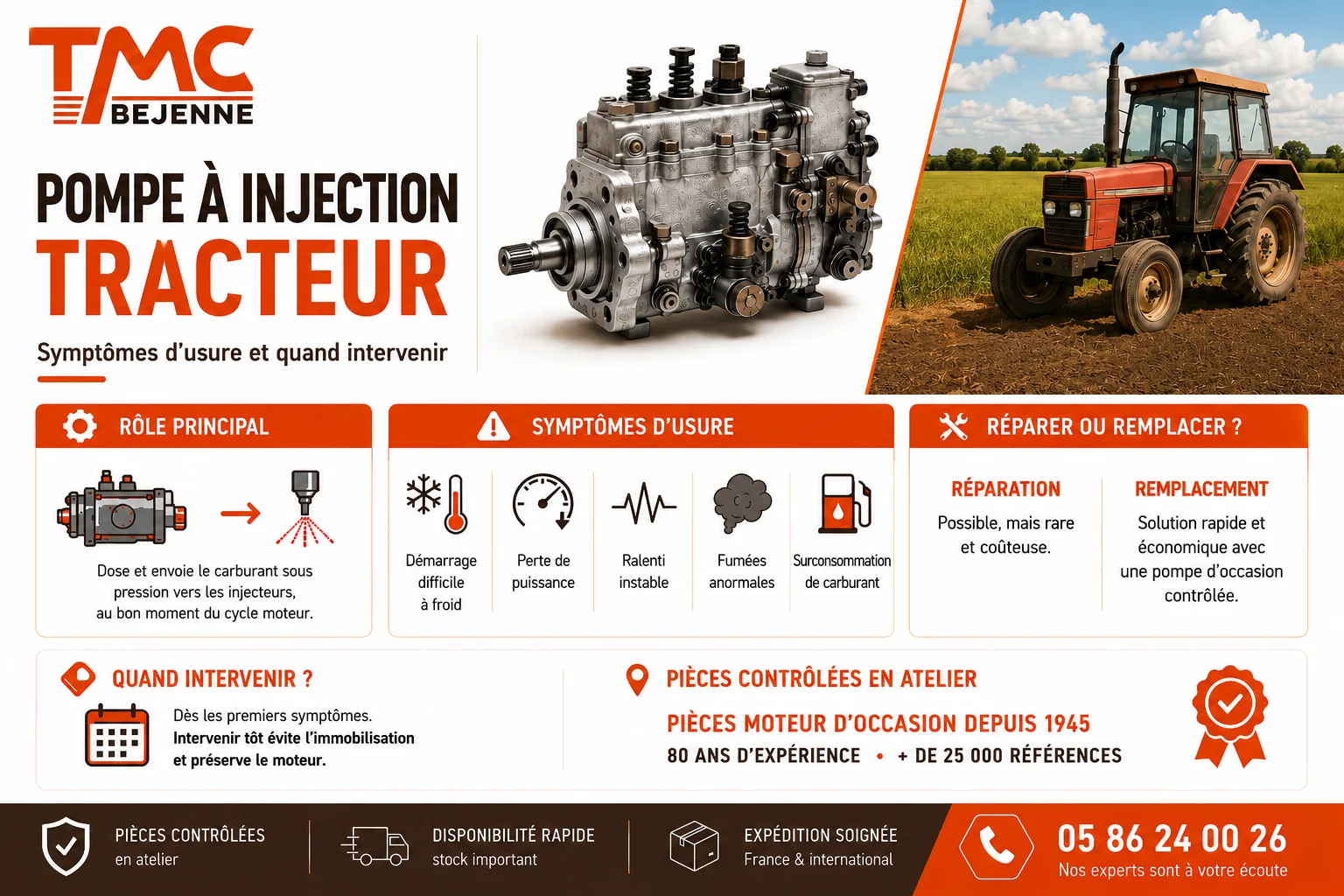
The injection pump measures and delivers fuel under pressure to the injectors at the correct point in the engine cycle. On older tractors, this is almost always a mechanical pump: inline, rotary, or distributor type, depending on the engine.
A well-maintained pump ensures precise injection, complete combustion, and quick starting. Conversely, a worn pump disrupts the entire engine operation, even if other components are in good condition. This makes diagnosis challenging: its symptoms often mimic other faults.
What are the symptoms of a faulty injection pump on a tractor?
The initial signs develop gradually and are rarely sudden:
- Hard starting, especially when cold: the engine requires several attempts, particularly in winter when compression pressure must compensate for low temperatures.
- Loss of power: reduced responsiveness when accelerating or under load, without obvious mechanical or electrical causes.
- Irregular idling: uneven speed fluctuations even when warm, indicating an inconsistent fuel flow.
- Abnormal smoke emissions: black smoke (excess fuel) or white smoke (incomplete combustion due to lack of injection).
- Excessive fuel consumption: poorly measured injection results in noticeable increased fuel use during extended work periods.
On vintage Ford or Massey Ferguson tractors, these symptoms often appear after long inactivity, especially if aged fuel has circulated in the system.
Injection pump repair: fix or replace?
Repairing a mechanical injection pump is technically feasible but requires a specialist equipped with a certified test bench and internal parts that are increasingly difficult to source for older models.
Standard exchange — returning the old pump in exchange for a reconditioned unit — is a well-established method but less available for very old models. On collector tractors, replacement with a tested used injection pump is often the quickest, most straightforward, and most cost-effective solution.
Timing and flow adjustment of the injection pump
The timing of the injection pump synchronizes fuel delivery with the piston position in the cylinder. Incorrect timing causes hard starting, incomplete combustion, or engine overheating. On older tractors, timing is set using marks on the flywheel and the pump, following manufacturer specifications.
Flow adjustment requires a specialized test bench. When replacing with a used pump from the same engine type, this setting is usually retained. However, recalibration is always recommended after any disassembly or reassembly of the pump.
Injection pumps by brand: CAV, Bosch, Lucas, Roto Diesel, Lavalette, Perkins
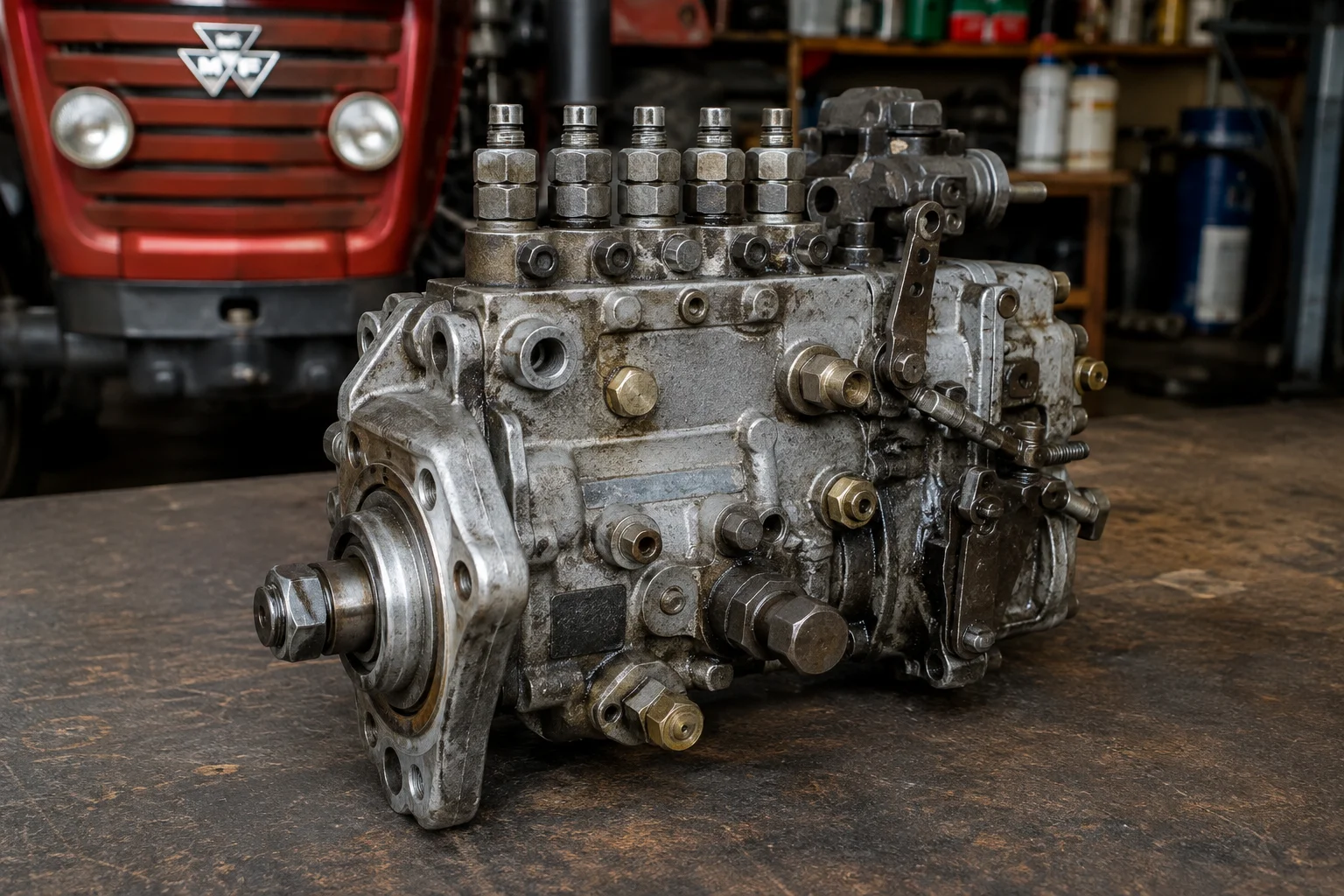
Older tractors are equipped with pumps from a few main mechanical families:
- CAV and Lucas Pumps: widely used on British tractors from the 1960s to 1980s — Ford, David Brown, Perkins.
- Bosch Pumps: fitted on German models and some John Deere and Deutz-Fahr.
- Roto Diesel and Lavalette Pumps: French manufacturers, found on a wide range of Renault and Massey Ferguson 1960s-1975 models.
- Perkins Pumps: power Perkins engines used in many brands — Massey Ferguson, David Brown, Ford.
Identifying your pump's brand directly guides you in sourcing replacement parts or exchange units.
Injection pumps for Renault, Ford, Massey Ferguson, Fiat, John Deere tractors
The main vintage series each have their specific features:
- Renault Super, N, TE, TX: Roto Diesel or Lavalette pumps depending on the generation; delicate disassembly on direct injection models.
- Ford 2000 to 6000: common CAV or Lucas pumps; timing must be strictly followed.
- Massey Ferguson 133 to 290: CAV, Lucas or Roto Diesel pumps according to engine type; parts still available.
- Fiat and Someca 411 to 780: mainly Bosch pumps; sensitive to fuel quality.
- John Deere 1020 to 4020: inline Bosch pumps; recalibration mandatory after replacements.
What is the average price of an injection pump?
In the new or specialized exchange market, prices can quickly exceed several hundred euros, even more for rare models. A checked used injection pump offers significant savings, with the advantage of often immediate availability on common references — avoiding return delays or waiting for reconditioning.
TMC Bejenne offers used engine parts sourced from dismantled agricultural tractors, inspected in workshop before shipping. With 80 years of experience in used agricultural parts, we cover key references from major vintage brands. To check availability for your model, call 05 86 24 00 26.
It measures and delivers fuel under pressure to the injectors at the correct point in the engine cycle. On older tractors, this is a mechanical pump (CAV, Bosch, Roto Diesel, Lavalette...). A properly functioning pump directly influences combustion quality and starting.
Hard starting when cold, loss of power, irregular idling, abnormal smoke, and excessive fuel consumption. These signs develop progressively. If the fuel system is sound and problems persist, the pump is the primary suspect.
The price varies depending on the model and supply chain. A checked used pump is consistently less expensive than a new part or a standard exchange unit. To get pricing for your reference, contact TMC Bejenne at 05 86 24 00 26.
Yes. TMC Bejenne stocks used engine parts for key vintage brands: Massey Ferguson, Ford, Renault, Fiat... Call 05 86 24 00 26 to check availability for your model.
Need more information?
Do you need advice or have any questions? Our team is here to help! Don't hesitate to contact us for all the information you need. Call 05 86 24 00 26 to find out more!