
Combine Harvester to Dismantle for Parts: What to Check Before Buying
Purchasing a damaged or non-operational combine harvester to salvage parts is a common practice among agricultural operators and technicians. This approach provides access to harvester parts at reduced prices, often unavailable or too expensive when new. On John Deere, Claas, New Holland, Case IH, or Massey Ferguson combine harvesters, a combine harvester to dismantle can contain many essential components in very good condition.
Before investing, a few key checks are essential to ensure the real value of the recoverable parts.
What Does a Combine Harvester Breaker Yard Mean?
In agriculture, the term "breaker yard" refers to acquiring a non-operational combine harvester to extract usable parts. The advantage over buying individual used parts is access to several essential components from the same model, often in better condition than expected, at a lower overall cost.
A combine harvester breaker yard may involve:
- A machine that has been damaged in an accident, with one area affected but the rest intact
- A combine harvester at the end of its mechanical life, retired after intensive use
- A machine immobilized due to a partial fire
The recoverability of parts directly depends on the cause of decommissioning and the damaged area.
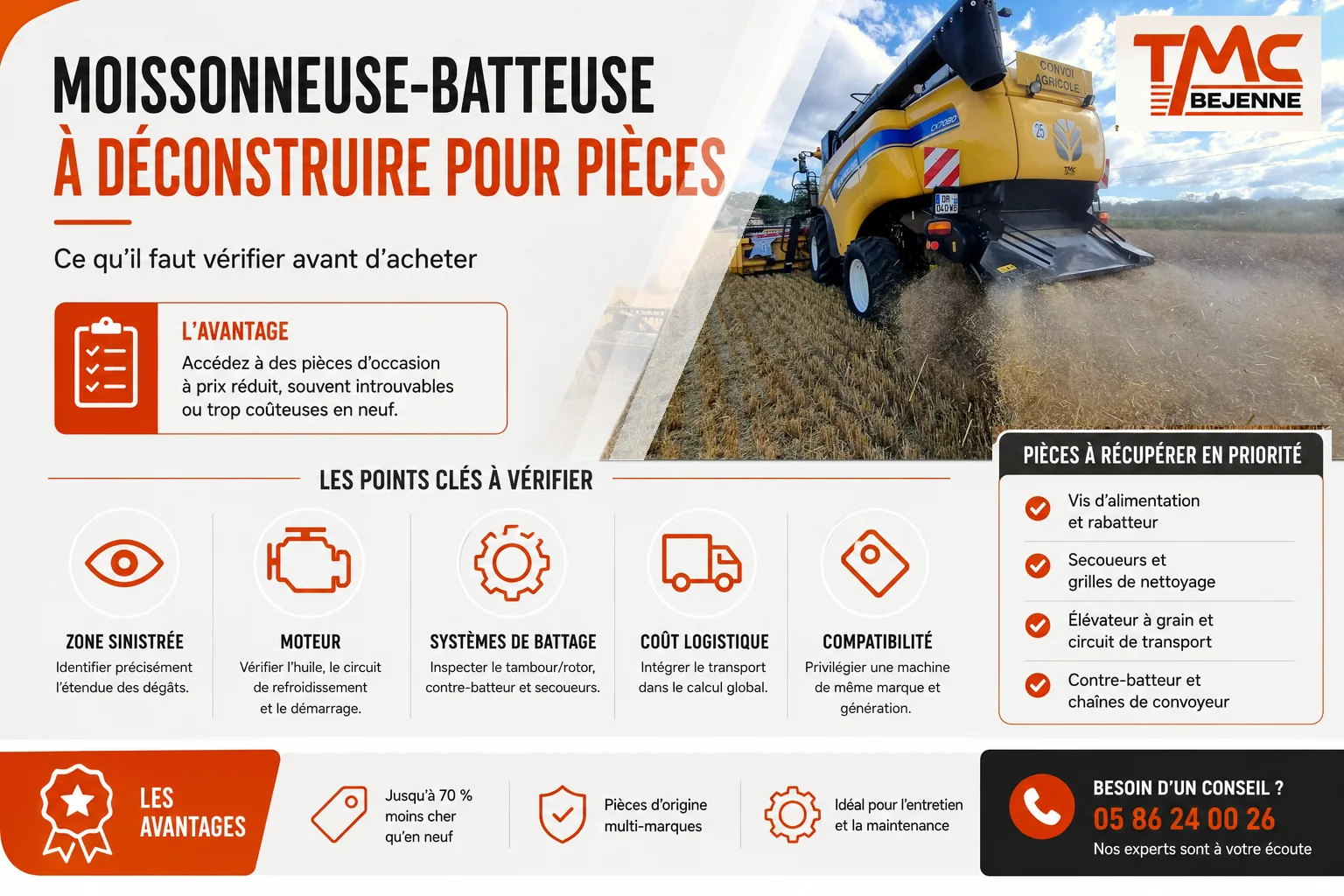
What Are the Components of a Combine Harvester?
Understanding the machine's structure helps quickly identify recoverable areas when dismantling.
The header
The cutter bar, dividers, fixed fingers, reel, and cutting sections (blades riveted to the sections) make up the header. This area is often most exposed to impact. For a machine with frontal damage, the condition of the cutter bar determines the overall value.
Feeding and threshing
The feeder auger transfers the crop from the cutter bar to the threshing system. The horizontal cylinder (or rotor on axial-flow machines) is the main threshing component, supported by the concave. Threshing systems vary by generation and brand; inspecting the concave is a priority.
Separation and cleaning
The separating parts — shakers with alternating motion, straw walkers, and cleaning sieves — process the straw after threshing, while cleaning sieves sort grain by size. Check the front of the tank and the corrugated sheets for deformities caused by impacts or dust build-up from intensive use.
Grain transport and storage
The grain auger and grain transport system move clean grain to the hopper. The hopper stores grain during harvest before unloading. These components are among the most sought-after wear parts on the used parts market.
Engine and auxiliaries
The engine, gearbox, conveyor chains, belts, and drive shafts make up the powertrain. The straw chopper blades and cross augers are part of the final straw separation components.
Which Used Combine Harvester Parts Should Be Prioritized?
The value of a machine to dismantle depends on intact areas.
Machine Damaged at the Header
The engine group, gearbox, threshing systems, shakers, hopper, and hydraulic elements are often intact. These essential parts represent most recoverable value and are the most expensive new replacement parts.
Machine at the End of Mechanical Life
Body parts, cab glass, seat, electrical equipment, and driveline components (drive shafts, conveyor chains) can be recovered if in good working order. Wear parts such as straw chopper blades, cutting sections, and corrugated sheets of the sieves should also be inspected.
Most Demanded Parts To Check Systematically
- The feeder auger and reel
- Shakers and cleaning sieves
- Grain elevator and grain transport system
- Concave and conveyor chains
These essential components are the most sought-after on the used agricultural parts market, especially for combine harvesters over ten years old working in tough harvest conditions.
Key Points to Watch Before Purchase
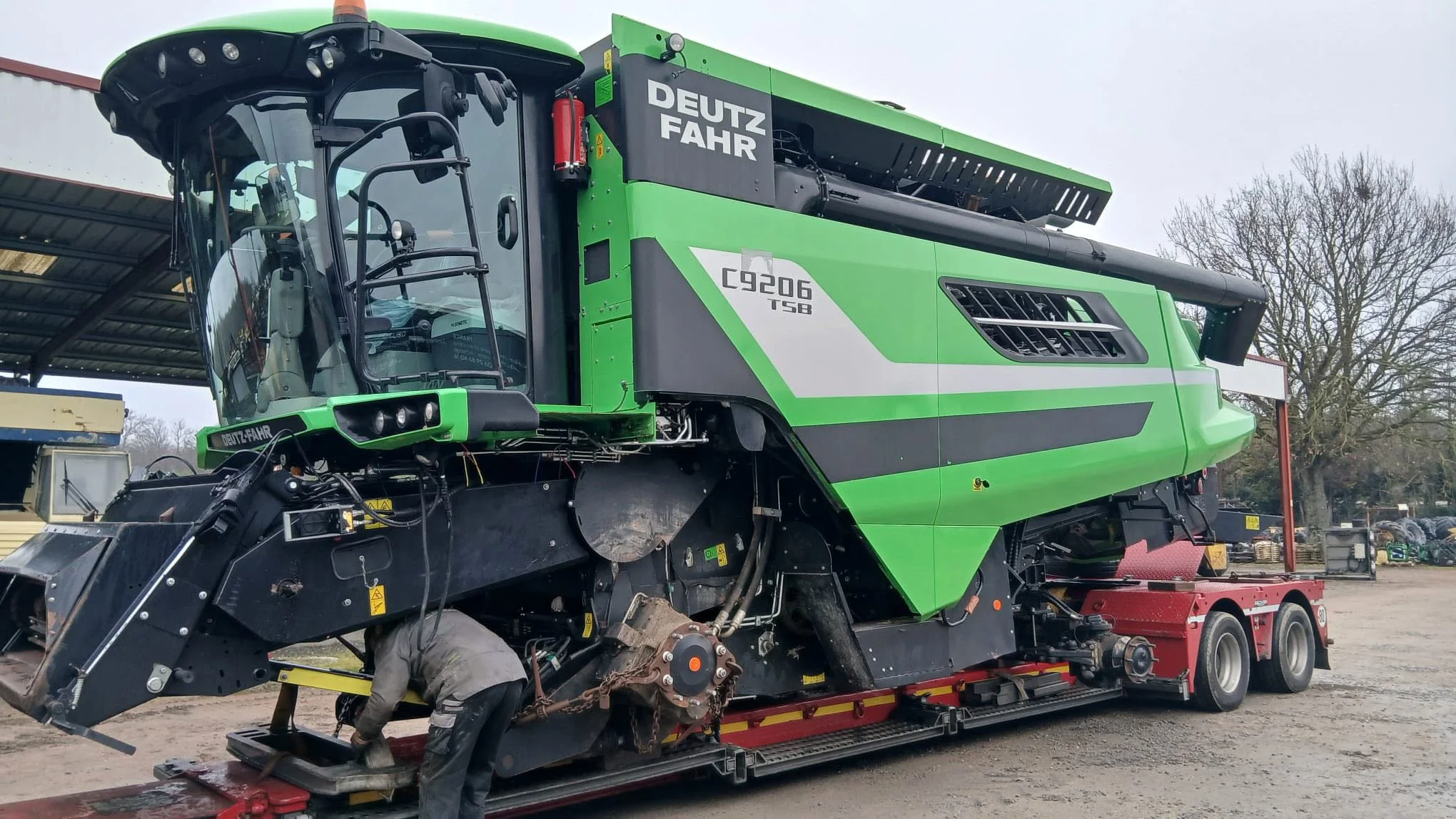
Buying a combine harvester to dismantle requires a thorough physical inspection. Photos alone cannot reveal the true extent of damage.
Precisely Identify the Damaged Area
A partial fire, even if localized, may have damaged electrical and hydraulic circuits far beyond the visible area. Water accumulation inside tanks or signs of heavy washing in unexpected areas are warning signs. The straw windrow and rear areas of the machine deserve inspection even if the damage is frontal.
Check the Engine if Possible
The engine is often the best value-for-price part available. Points to verify:
- Clean oil, without excessive carbon deposits or water traces
- No overheating signs in the cooling circuit
- Confirmed good operation at startup if the machine can still run
Inspect Threshing Systems
Drum or rotor, concave, shakers: look for impacts, deformations, or missing parts. A damaged threshing system significantly reduces recoverable value.
Include Logistic Costs
Transporting a non-operational combine is a significant cost. This must be calculated before purchase decisions—it can negate financial benefits if the machine is far away or difficult to move.
Used Combine Harvester Parts by Brand: New Holland, Case IH, Claas, John Deere, Massey Ferguson, Laverda, Deutz-Fahr
The proper function of replacement parts primarily depends on compatibility with the original machine. Each brand has specific specifications, particularly for threshing and separation components. A breaker yard from the same model and generation is always the most reliable source.
On New Holland TC, CR, and CX and Case IH Axial-Flow machines, the axial rotor design is brand-specific requiring dedicated parts. The concave, cleaning sieves, conveyor chains, and grain auger are the most in-demand components. On Claas Lexion and Tucano, APS threshing systems and straw walkers differ by generation. John Deere S and T series cabin parts—seats, windows—are often recoverable even on machines with poor mechanical condition. For Massey Ferguson Beta and MF 7300, shakers and key threshing components have series-specific references. Laverda M and MX series and Deutz-Fahr C and M series complete the overview: shakers, cleaning sieves, and corrugated sheets are the most requested used components.
Combine Harvester to Dismantle: A Strategic Resource for Operations
Ahead of harvest campaigns, building a stock of parts from a combine harvester breaker yard is a relevant approach for farms and contracting businesses managing multiple combines: a machine of the same brand and generation—John Deere, Claas, New Holland—offers the best compatibility guarantees and can ensure a steady supply of parts for several years of preventive maintenance, without having to handle dismantling or component storage internally. TMC Bejenne has been dismantling combine harvesters since 1945 and offers more than 25,000 references available on its website. Tel. +33 5 35 54 42 10.
The term "combine harvester arm" generally refers to the unloading arm—the articulated auger that transfers grain from the hopper to the wagon or trailer during unloading. It can also refer to the reel or fixed fingers on certain headers.
A combine harvester consists of five main assemblies: the header (cutter bar, feeder auger, reel), threshing systems (cylinder or rotor, concave), separation organs (shakers, straw walkers, return pan), the cleaning system (sieves, fan), and the grain transport system to the hopper.
New entry-level combine harvesters cost between 150,000 and 250,000 euros depending on header width. Used machines, 10 to 15 years old and inspected, sell between 30,000 and 80,000 euros based on condition and model. Purchasing parts from a combine harvester breaker yard remains the most cost-effective way to keep an existing machine running smoothly.