
Used Massey Ferguson Hydraulics
85 available products
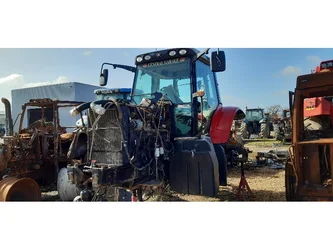
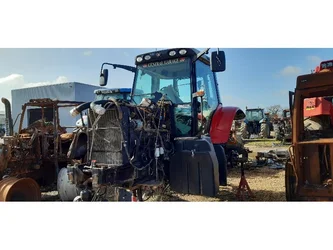
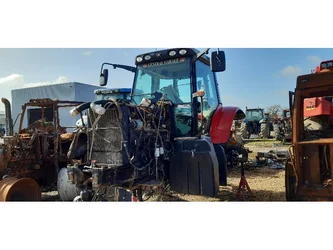
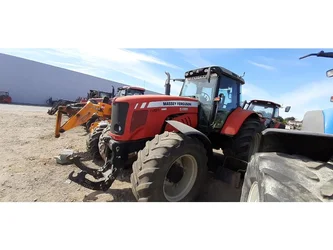
The hydraulic system is central to the operation of your Massey Ferguson tractor. Pumps, valves, cylinders, or seals: each component plays a vital role in ensuring hitch lifting and tool control. Finding the right used hydraulic part compatible with your model helps keep your machine operational without excessive costs. Discover our selection of used Massey Ferguson hydraulic parts.
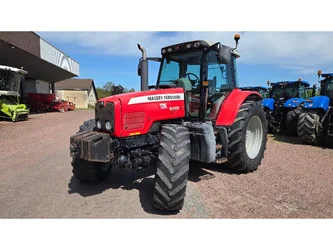
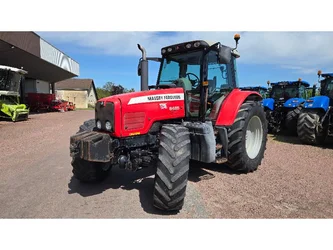
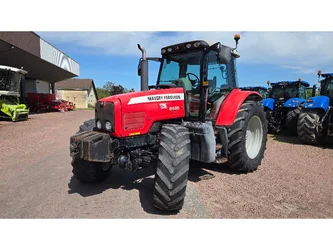
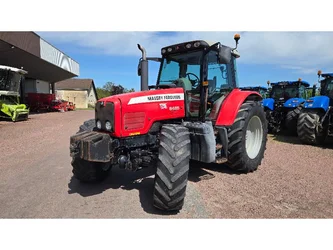
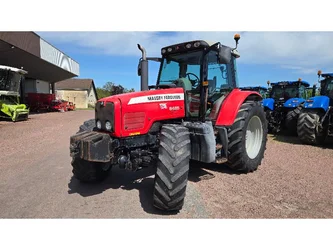
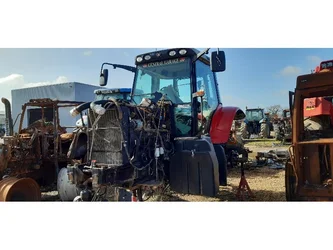
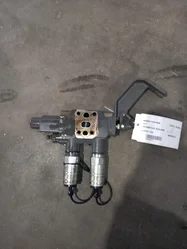
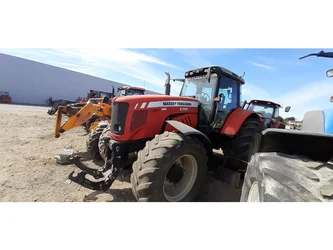
![Hydraulics for MASSEY FERGUSON 6465]()
Hydraulics for MASSEY FERGUSON 6465
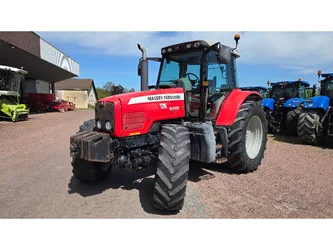
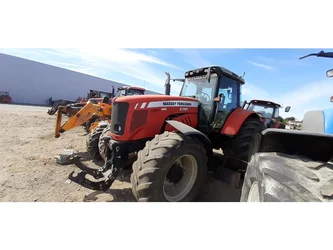
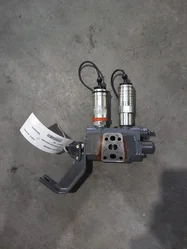
In stock, deliverable within 2-3 daysGet a quote![Hydraulics for MASSEY FERGUSON 6465]()
Hydraulics for MASSEY FERGUSON 6465
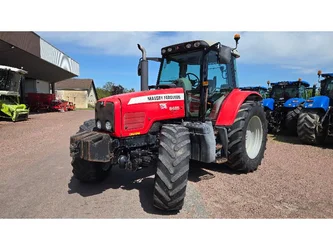
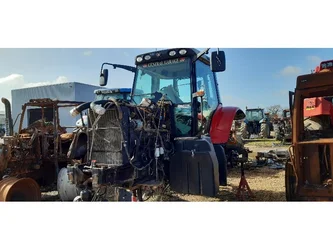
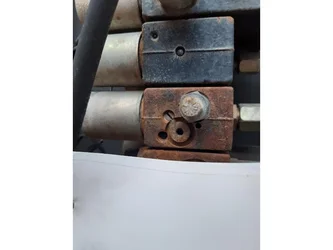
In stock, deliverable within 2-3 daysGet a quote![Hydraulics for MASSEY FERGUSON 6465]()
Hydraulics for MASSEY FERGUSON 6465
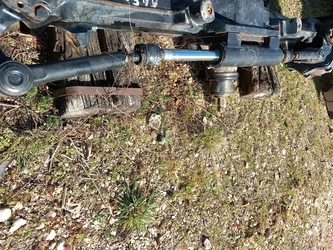
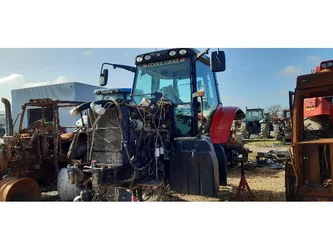
In stock, deliverable within 2-3 daysGet a quote![Vérin for MASSEY FERGUSON 6465]()
Vérin for MASSEY FERGUSON 6465
In stock, deliverable within 2-3 daysGet a quote![Vérin for MASSEY FERGUSON 6465]()
Vérin for MASSEY FERGUSON 6465
In stock, deliverable within 2-3 daysGet a quote![Hydraulics for MASSEY FERGUSON 6465]()
Hydraulics for MASSEY FERGUSON 6465
In stock, deliverable within 2-3 daysGet a quote![Hydraulics for MASSEY FERGUSON 6465]()
Hydraulics for MASSEY FERGUSON 6465
In stock, deliverable within 2-3 daysGet a quote![Cylinder for MASSEY FERGUSON 6455]()
Cylinder for MASSEY FERGUSON 6455
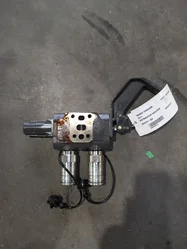
In stock, deliverable within 2-3 daysGet a quote![Hydraulic distributor for MASSEY FERGUSON 7485]()
Hydraulic distributor for MASSEY FERGUSON 7485
In stock, deliverable within 2-3 daysGet a quote![Hydraulic distributor for MASSEY FERGUSON 6485]()
Hydraulic distributor for MASSEY FERGUSON 6485
In stock, deliverable within 2-3 daysGet a quote![Hydraulic distributor for MASSEY FERGUSON 7485]()
Hydraulic distributor for MASSEY FERGUSON 7485
In stock, deliverable within 2-3 daysGet a quote![Hydraulic distributor for MASSEY FERGUSON 6612]()
Hydraulic distributor for MASSEY FERGUSON 6612
In stock, deliverable within 2-3 daysGet a quote![Hydraulic distributor for MASSEY FERGUSON 6612]()
Hydraulic distributor for MASSEY FERGUSON 6612
In stock, deliverable within 2-3 daysGet a quote![Hydraulic distributor for MASSEY FERGUSON 6612]()
Hydraulic distributor for MASSEY FERGUSON 6612
In stock, deliverable within 2-3 daysGet a quote![Hydraulic distributor for MASSEY FERGUSON 7485]()
Hydraulic distributor for MASSEY FERGUSON 7485
In stock, deliverable within 2-3 daysGet a quote![Hydraulic distributor for MASSEY FERGUSON 7485]()
Hydraulic distributor for MASSEY FERGUSON 7485
In stock, deliverable within 2-3 daysGet a quote![Hydraulic distributor for MASSEY FERGUSON 7485]()
Hydraulic distributor for MASSEY FERGUSON 7485
In stock, deliverable within 2-3 daysGet a quote![Hydraulic distributor for MASSEY FERGUSON 7485]()
Hydraulic distributor for MASSEY FERGUSON 7485
In stock, deliverable within 2-3 daysGet a quote![Hydraulic distributor for MASSEY FERGUSON 7485]()
Hydraulic distributor for MASSEY FERGUSON 7485
In stock, deliverable within 2-3 daysGet a quote![Hydraulic distributor for MASSEY FERGUSON 6485]()
Hydraulic distributor for MASSEY FERGUSON 6485
In stock, deliverable within 2-3 daysGet a quote![Hydraulic distributor for MASSEY FERGUSON 6485]()
Hydraulic distributor for MASSEY FERGUSON 6485
In stock, deliverable within 2-3 daysGet a quote![Hydraulic distributor for MASSEY FERGUSON 6485]()
Hydraulic distributor for MASSEY FERGUSON 6485
In stock, deliverable within 2-3 daysGet a quote![Cylinder for MASSEY FERGUSON 6612]()
Cylinder for MASSEY FERGUSON 6612
In stock, deliverable within 2-3 daysGet a quote![Hydraulic distributor for MASSEY FERGUSON 7270]()
Hydraulic distributor for MASSEY FERGUSON 7270
In stock, deliverable within 2-3 daysGet a quote![Hydraulic for MASSEY FERGUSON 7485]()
Hydraulic for MASSEY FERGUSON 7485
In stock, deliverable within 2-3 daysGet a quote![Hydraulic for MASSEY FERGUSON 6495]()
Hydraulic for MASSEY FERGUSON 6495
In stock, deliverable within 2-3 daysGet a quote![VERIN HYDRO VIS DE VIDANGE]()
VERIN HYDRO VIS DE VIDANGE
In stock, deliverable within 2-3 daysGet a quote![Hydraulic distributor for MASSEY FERGUSON 5712]()
Hydraulic distributor for MASSEY FERGUSON 5712
In stock, deliverable within 2-3 daysGet a quote![Hydrostatic motor for MASSEY FERGUSON 38]()
Hydrostatic motor for MASSEY FERGUSON 38
In stock, deliverable within 2-3 daysGet a quote![Hydraulic for MASSEY FERGUSON 38]()
Hydraulic for MASSEY FERGUSON 38
In stock, deliverable within 2-3 daysGet a quote![Cylinder for MASSEY FERGUSON 187]()
Cylinder for MASSEY FERGUSON 187
In stock, deliverable within 2-3 daysGet a quote![Cylinder for MASSEY FERGUSON 190]()
Cylinder for MASSEY FERGUSON 190
In stock, deliverable within 2-3 daysGet a quote![Cylinder for MASSEY FERGUSON 187]()
Cylinder for MASSEY FERGUSON 187
In stock, deliverable within 2-3 daysGet a quote![Cylinder for MASSEY FERGUSON 1030]()
Cylinder for MASSEY FERGUSON 1030
In stock, deliverable within 2-3 daysGet a quote![Cylinder for MASSEY FERGUSON 1030]()
Cylinder for MASSEY FERGUSON 1030
In stock, deliverable within 2-3 daysGet a quote![Multicoupling for MASSEY FERGUSON 1030]()
Multicoupling for MASSEY FERGUSON 1030
In stock, deliverable within 2-3 daysGet a quote

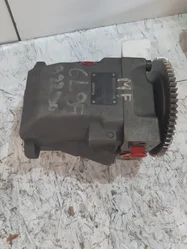

Massey Ferguson Hydraulic Parts: Pumps, Valves, and More
On a Massey Ferguson tractor, the hydraulic pump generates pressure between 180 and 200 bars to supply the entire circuit. It directly influences the lifting power and responsiveness of the attached tools.
Valves direct the oil flow to the appropriate actuators: lift cylinders, steering cylinders, or rear hydraulic outlets. A faulty valve often results in slow lifting or significant pressure loss under load.
The 5400, 6200, and 6400 series notably use Bosch Rexroth original pumps, referenced 3797116M1 and 3797116M2, combining lift and steering functions. Finding a used part matching these references can significantly reduce repair costs.
Don't forget the handbrake and mounting seals, where wear can compromise the hydraulic circuit's tightness.
Pump, valve, filter, cylinder, and MF coupler
- The hydraulic filter should be replaced approximately every 500 hours to keep the circuit clean.
- Single or double-acting valves control tools with unidirectional or alternating movements.
- A poorly sealed quick hydraulic coupler causes flow loss and contaminates the circuit oil.
- MF lift cylinders come in single or double-acting versions depending on the type of carried or towed tool.
- Tandem pumps, common in recent series, simultaneously supply the lift and power steering.
- A worn gear pump is characterized by a distinctive dull noise and slow pressure build-up.
- Replacing a hydraulic cylinder requires verifying the stroke and rod diameter before ordering.
Compatibility by series: find the right part
The Massey Ferguson range spans several decades and dozens of models, making compatibility a particularly sensitive matter. Mixing up a reference between two close series can lead to ordering an incompatible part, even if dimensions appear identical at first glance.
Each major MF tractor family corresponds to a distinct technical generation, with its own coupling and flow standards. A valve designed for series 200 does not automatically fit series 100, despite similar appearances.
The most reliable method remains cross-checking the tractor's serial number with the manufacturer reference engraved on the faulty part. For models produced before 1980, manufacturing tolerances vary more from one unit to another, making systematic verification essential before any order.
Series 35, 130, 135, 140, and 145: PTO and lift
- Series 35, 130, 135, 140, and 145 are equipped with a Ferguson closed-circuit hydraulic system called "Draft Control."
- The lift cylinder integrated into the rear housing is specific to these series and not interchangeable with series 200.
- The hydraulic pump on these models delivers about 11 to 14 liters per minute, significantly less than recent series.
- The rear PTO and lift share the same hydraulic circuit on these vintage tractors.
- A double-acting valve kit compatible with series 135 and 140 carries the replacement reference 1860100M95.
- Seal tightness on the lift cover (reference 180908M1) is a frequent weak point on these older models.
- Before any order, it is essential to match the exact model with the manufacturing year, as series 35 and 130 evolved technically during production.
Series 158, 165, 168, 178, and 825: valve and valve block
These intermediate series share a hydraulic architecture compatible with a 4-way valve kit, capable of operating single or double-acting cylinders depending on the attached tool's needs. The replacement reference 1860100M95 is documented for these models, facilitating identification when ordering used parts.
The lift control valve is the most common failure point in these series: internal wear results in slow and uncontrolled descent of the hitch under load.
The valve block mounts under the lift cover, meaning the entire unit must be removed before service. On the 825 models, compatibility with series 100 and 200 has been extended, but verifying the engraved reference on the valve body remains the only reliable way to confirm the part's suitability.
Which hydraulic oil to use for a Massey Ferguson?
- Massey Ferguson recommends "Permatran" type oil or equivalent meeting MF 1135 standard.
- The recommended viscosity is generally 10W-30 or 10W-40, suitable for European temperatures.
- Older models like the MF 135 use ISO VG 46 mineral hydraulic oil perfectly suited to the circuit.
- Using non-compliant oil can cause premature wear of the pump and seals.
- Hydraulic circuit oil changes are recommended every 1,000 to 1,200 operating hours depending on the model.
- On recent 6400 series, hydraulic oil also lubricates the transmission, requiring a certified multifunction product.
- Check reservoir capacity before refilling: it varies from 15 liters on older models to over 40 liters on modern series.
For a Massey Ferguson FF30, it is recommended to use a universal transmission hydraulic oil type UTTO (Universal Tractor Transmission Oil), meeting Massey Ferguson specifications M1135 or M1141. A 10W-30 or 80W oil is generally suitable for this model. Always consult your tractor's user manual to confirm the exact viscosity recommended by the manufacturer according to climatic conditions.
To find the exact reference of a Massey Ferguson hydraulic part, start by noting your tractor's serial number, engraved on the chassis. This number precisely determines the series and manufacturing year. Then, consult an MF parts catalog or contact an agricultural hydraulic specialist who can cross-reference this data with the manufacturer reference sought.
A loss of lift power is often the first visible sign: the hitch rises slowly or not at all. Unusual noises like whistling or clicking near the pump also indicate internal wear. Hydraulic pressure drops, oil leaks around the pump, or heavy steering are other warning signs to monitor promptly.
Compatibility among MF series varies by component. Some hydraulic parts from the 100 and 200 series are interchangeable, as are those from the 5400, 6200, and 6400 series, which sometimes share the same manufacturer references. However, pumps and valves from older series are not compatible with newer models. Verifying the manufacturer reference remains essential before any replacement to avoid improper installation.
Check the hydraulic oil level every 50 hours of operation, and perform a full oil change typically every 500 to 1,000 hours depending on the model. Replace the hydraulic filter at each oil change. During heavy use periods, such as harvest, inspect hoses and fittings more frequently to detect leaks in time.
Yes, a used hydraulic valve block can be suitable, provided certain precautions are taken. The manufacturer reference must exactly match the original model's. Upon receipt, check for cracks, scratches on the spools, and visible leaks. A poorly maintained valve block may cause pressure drops or lifting malfunctions. Consulting a specialist for inspection and installation remains the best guarantee of reliability.