
Tractor Fuel Tank: Prevent Winter Breakdowns
When a tractor sits idle for several weeks, the diesel fuel in the tank can deteriorate and cause starting issues. This problem is often underestimated but is a common cause of engine supply troubles after winter. For John Deere, New Holland, Case IH, or Massey Ferguson tractors, proactive maintenance of the fuel system before winter avoids costly repairs during startup.
Tractor Fuel Tank: Role and Components of the Fuel System
The tank is more than just a container. It includes several key components: the diesel gauge and float tell the fuel level, tank valves regulate the flow to the pump, and the tank vent balances pressure during filling and consumption. Some models also have a sedimenter that traps impurities before they reach the injectors. Rotomolded plastic tanks are now common on modern tractors due to their hydrocarbon resistance, while older Ford and Renault models still use steel tanks that are more prone to corrosion.
On Massey Ferguson or John Deere tractors equipped with two tanks, a faulty valve can lead to gradual fuel loss or allow air into the system. A blocked tank vent causes negative pressure that disrupts fuel flow and results in engine hesitations that are difficult to diagnose without a full system check.

Tractor Fuel Tank Capacity: Ranges by Engine Power
Tank capacity directly reflects the machine’s power and intended use. Older compact models like the Renault D22 or Ford 3000 hold between 40 and 80 liters. Versatile tractors with 70 to 150 hp — which make up the core of the French fleet — have tanks of 100 to 200 liters, such as Case IH Maxxum or equivalent series from New Holland. Above 200 hp, tanks over 400 liters are common on Fendt and Deutz-Fahr Agrotron models. These large tanks, if partially filled for several months, pose higher risks of condensation and fuel degradation.
Why Fuel Degrades During Winter Storage
Diesel is not stable over time. Left stagnant, it oxidizes and forms resins that deposit in the fuel system. This process is accelerated by biodiesel blends (B7, B10), now standard at the pump, which degrade faster in the presence of moisture. Condensation worsens this: when the tank is partially empty, nightly temperature changes cause moisture to form on cold walls. Water collects at the bottom, promotes corrosion, and can feed microorganisms that create a viscous sludge clogging filters and injectors.
Starting Problems: Effects of Poorly Prepared Fuel System
Typical symptoms include hard or no start, irregular running with jerks, power loss, and abnormal smoke from the exhaust. In severe cases, the fuel filter is fully blocked, the feed pump cavitates, and injectors lose spraying precision. On Massey Ferguson mechanical pump tractors and John Deere models with Common Rail systems, the consequences are the same and repairs can immobilize the tractor for several weeks.
Pre-Winter Maintenance: Fuel System Checkpoints
Before storing the tractor, simple steps can secure the fuel system. Filling the diesel tank completely is the most effective: less air in the tank means less condensation. Replacing the fuel filter at the same time is recommended, even if the mileage interval isn’t reached — a filter already clogged won’t last through a long downtime. Inspect hoses as well, since aged elastomers can crack from frost. On high-use Case IH or New Holland tractors, checking the fuel pump completes this inspection effectively.
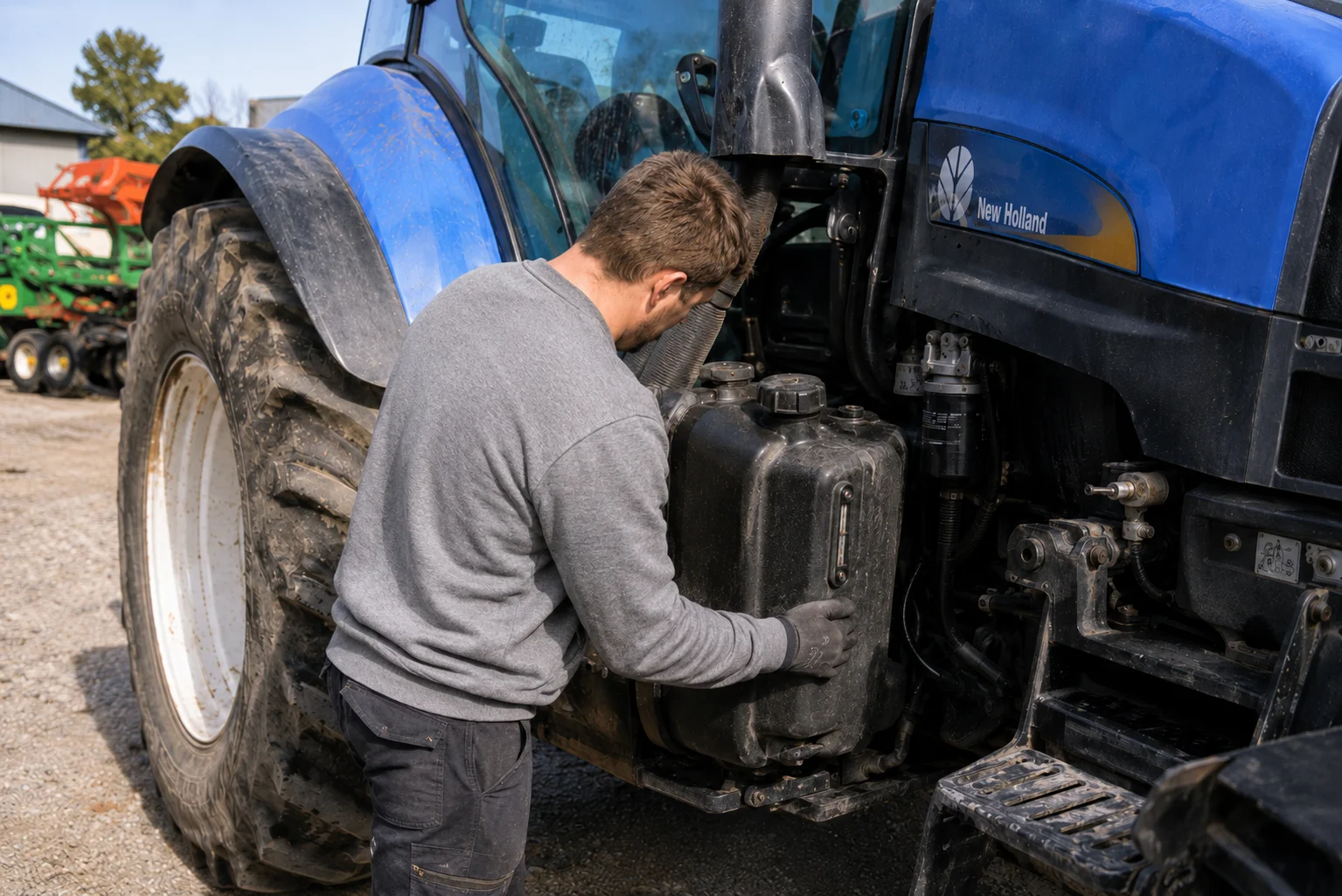
Used Tractor Fuel Tanks Available at TMC Bejenne
When a tank is cracked, corroded, or too damaged to keep, replacing it with a used part from dismantling is a fast and cost-effective solution. TMC Bejenne offers a wide selection of used tractor fuel tanks, carefully inspected and tested before shipment, for all major agricultural brands. With over 25,000 references in our catalog and more than 80 years of expertise since 1945, TMC Bejenne meets the needs of operators, agricultural contractors (ETA), and mechanics, providing lead times adapted to field constraints. Looking for a tank for a New Holland, Case IH, or John Deere? Contact our team at 05 86 24 00 26 to check availability for your specific model.
Yes, agricultural tractors run on diesel. Untaxed off-road diesel (GNR) is authorized and common in farming. Some newer tractors accept B7 or B10 blends (with biodiesel content), but check the manufacturer's recommendations before use, especially for high-pressure Common Rail systems.
It varies by power and model. Older compact models hold 40 to 80 liters, versatile tractors with 70 to 150 hp have 100 to 200 liters, and large series above 200 hp can exceed 400 liters, with capacities over 500 liters on some high-power John Deere and Fendt models.
Road tractors (semi-trucks) generally carry between 400 and 900 liters, sometimes split over two tanks. These vehicles have very different fuel circuit requirements and regulations (Euro VI standards) compared to agricultural tractors.