
Agricultural Tractor Maintenance: Essential Practices Before and During Winter
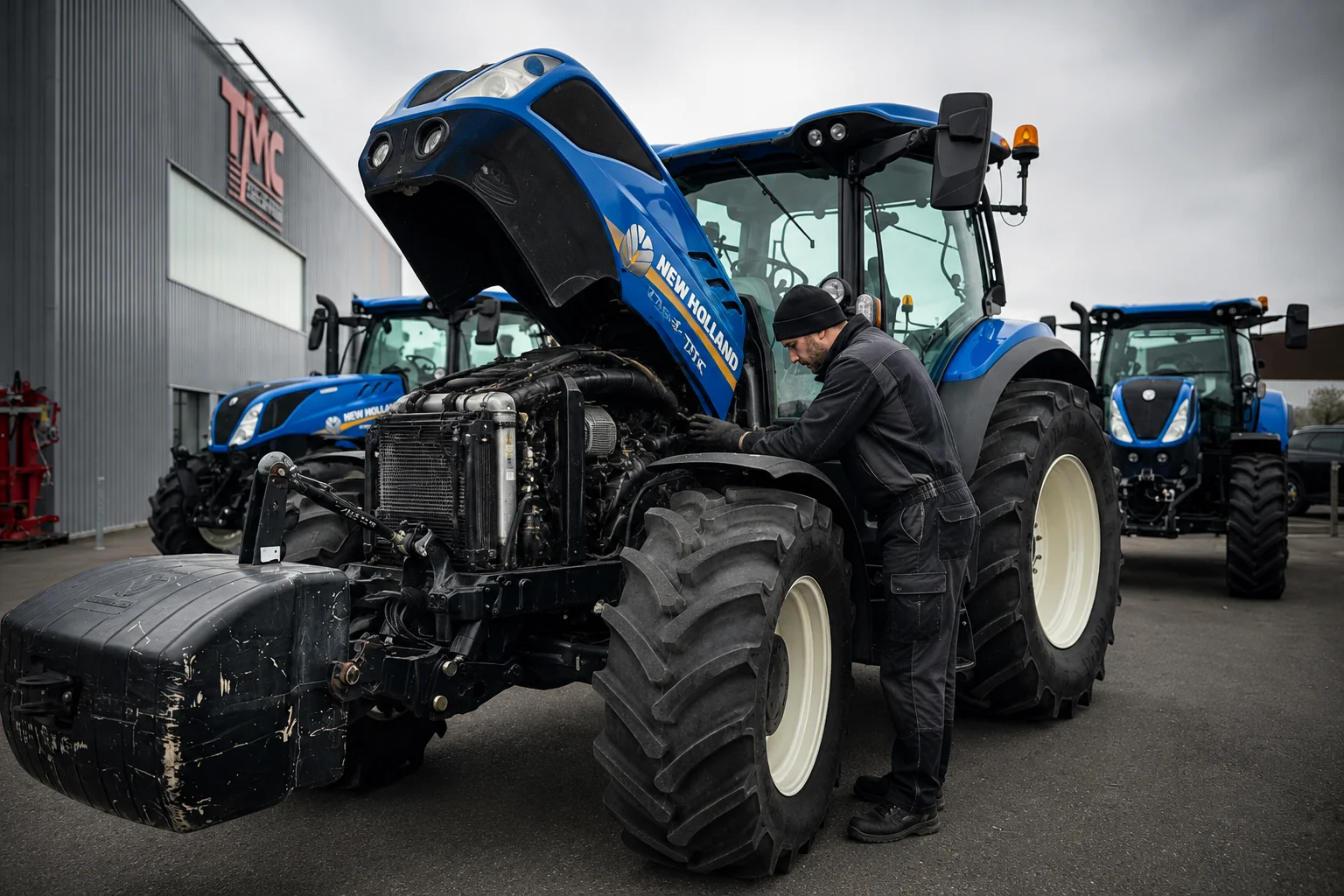
A well-maintained tractor lasts longer, operates more efficiently, and breaks down less often. This principle applies year-round, but winter sharpens its importance: components wear out faster in cold weather, extended periods of inactivity accelerate the degradation of certain fluids, and breakdowns always happen at the worst times. For brands like John Deere, New Holland, Case IH, Massey Ferguson, Renault, Deutz-Fahr, or Fendt, a few hours of maintenance in autumn can often prevent several days of downtime.
How to Maintain an Agricultural Tractor?
Tractor maintenance involves several types of interventions that do not all follow the same schedule. Some require regular inspection after each use — checking oil levels, tire condition, general cleanliness — while others are planned annually or per engine hours.
The foundation is the same for all farm machinery: follow the manufacturer's user manual recommendations. Your tractor's service manual or technical guide specifies maintenance intervals, fluid specifications, and torque settings. For older models, this information is often available through owners' clubs or specialized publishers. Working without these data increases the risk of premature wear or damage due to poor quality fluids.

How Often Should You Change the Oil in an Agricultural Tractor?
Oil changes are among the most important and often underestimated tractor maintenance tasks. They involve engine oil as well as, depending on the model, axle oil, transmission oil, and hydraulic fluid.
- Engine oil: typically every 200 to 500 hours depending on manufacturers, or once a year if the tractor is used sparingly. Used oil becomes acidic over time and damages internal seals, even when the engine is off.
- Gearbox and axle oil: every 500 to 1,000 hours on most models. Often neglected, this oil change is crucial for the lifespan of the transmission and axle.
- Hydraulic fluid: every 1,000 to 2,000 hours, with simultaneous replacement of the hydraulic filter.
- Coolant: every 2 years or as per manufacturer recommendations, with an antifreeze concentration check before winter.
Filter changes (air, fuel, oil) should follow the same intervals as the corresponding oil changes.
Tractor Axle Oil: Why It’s a Key Maintenance Component
Tractor axle oil is one of the most stressed yet least monitored fluids. It lubricates the rear axle gears, differentials, and sometimes the wheel reducers, which operate under heavy loads each time the tractor moves.
Degraded axle oil — either old, contaminated by water or metal wear particles — accelerates wear of gears and bearings. In cold weather, overly thick or inappropriate axle oil can cause starting issues or affect handling. Inspect axle oil using the level screw: oil that looks milky indicates water contamination, which must be addressed immediately.
On older tractors, notably Massey Ferguson or Renault vintage models, this check often reflects the overall maintenance condition of the machine.
Tractor Hydraulic System: Key Points to Check Before Winter
- Hydraulic fluid level and quality: check before winter. Polluted or degraded fluid impairs all hydraulic systems — lift, steering, distributors.
- Hydraulic filter: replace at recommended intervals. A clogged filter restricts flow and worsens the effects of cold on oil viscosity.
- Hoses and fittings: visually inspect for any seepage. In cold weather, seals harden and minor leaks can turn into serious ones.
- Hydraulic cylinders: check condition of rods and protective boots. A scratched rod or torn boot lets moisture in, causing accelerated internal wear.
- Drive shaft: the drive shaft and hitch bar are often overlooked during servicing. A poorly lubricated drive shaft squeaks, develops play, and eventually breaks under load.
Tractor Battery Maintenance: Prepare Before the First Frosts
The battery is the component most sensitive to low temperatures. A well-maintained tractor battery should hold charge and deliver sufficient starting current even in severe cold. Checking its condition before winter is a simple precaution that prevents the all-too-common issue of a tractor refusing to start on the first freezing morning.
Using a multimeter to test a battery measures the voltage under load and assesses its actual capacity. A battery showing 12.6 V resting but dropping below 10 V when starting is nearing the end of its life. Internal short circuits or water vapor accumulation in cells are common causes of failure in tractors exposed to harsh climates.
Also remember to inspect cables: oxidized starter cables or a loose ground cable cause voltage drops that prevent starting even with a new battery.
Tractor Service Manual: An Essential Tool for Proper Maintenance
The tractor service manual or maintenance guide is the reference document for any serious upkeep work. It specifies maintenance intervals, fluid levels and qualities, adjustment procedures, and torque settings. Without it, risks of mistakes — wrong oil type, missed intervals, incorrect procedures — increase significantly.
For common models:
- Renault: service manuals and technical guides are available from specialized publishers or through owners’ clubs for vintage tractors.
- Massey Ferguson: technical sheets and manuals cover most series from 133 to 390.
- Ford: manuals available for series 2000 to 7000 in French or English versions.
- John Deere and New Holland: technical documentation is generally more accessible through official networks or agricultural manual publishers.
Tires, Lights, and Bodywork: Often Overlooked Maintenance Points
Complete maintenance isn’t limited to the engine and fluids. Several external components deserve regular attention:
- Tires: check pressure (low-pressure tires for tough terrain work) and wear on the sidewalls. Severely worn tires lose grip and traction, especially on slippery winter surfaces.
- Lights: check front and rear signal lights, work lights, and windshield wipers. Required for road travel, especially in winter with reduced visibility.
- Cleaning: a clean tractor inside and out makes it easier to identify leaks, cracks, or corrosion spots. Cleaning after each use in muddy conditions helps prevent premature wear on accessible parts.
What Does Agricultural Tractor Maintenance Cost?
Maintenance costs vary greatly depending on model, age, operating hours, and types of interventions performed. For a modern 100 to 150 hp tractor with regular servicing, annual routine maintenance (oil changes, filters, small parts) typically ranges between 500 and 1,500 euros, excluding major wear parts.
For older or vintage tractors, the logic differs: new parts are often unavailable or very expensive. Using checked second-hand parts — sourced from dismantling agricultural tractors — is the solution to keep these machines operational without overspending. TMC Bejenne has supported operators in this approach since 1945, offering over 25,000 references. Tel. +33 5 35 54 42 10.
Is the Technical Inspection Mandatory for a Tractor?
In France, since January 1, 2023, registered agricultural tractors circulating on public roads are subject to periodic technical inspections. This inspection checks brake systems, lighting, steering, hitch compliance, and absence of fluid leaks.
Unregistered tractors (working exclusively in fields without road use) are generally exempt. However, older machines regularly used on roads, including vintage tractors, may be subject to inspection depending on their status.
Maintaining a tractor involves regular checks (oil levels, tire pressure, lighting condition) and periodic interventions based on engine hours: engine oil change, axle oil change, filter replacements, coolant and hydraulic fluid checks. Refer to the manufacturer's service manual for precise intervals.
Engine oil is generally changed every 200 to 500 hours, axle and transmission oil every 500 to 1,000 hours, and hydraulic fluid every 1,000 to 2,000 hours. These intervals vary depending on the manufacturer and usage conditions. If exact hours are unknown, an annual oil change is a reasonable precaution.
Yes, since January 1, 2023, for registered agricultural tractors operating on public roads. The inspection covers brakes, lighting, steering, hitches, and checks for leaks. Tractors used exclusively off-road are generally exempt.
For a modern tractor, annual routine maintenance (oil changes, filters, small consumables) typically costs between 500 and 1,500 euros. For older tractors, using checked second-hand parts significantly reduces this budget. TMC Bejenne offers parts sourced from dismantled agricultural tractors for major brands. Tel. +33 5 35 54 42 10.