
Used John Deere Trumpet at the Best Price
53 available products
Are you looking for a used John Deere rear axle trumpet? Our catalogue features refurbished parts compatible with John Deere tractors, available in 12V and 24V versions. Each trumpet undergoes a thorough selection process at our Naintré facility. Our technicians check sealing integrity, test electrical circuits, and inspect mounting supports to ensure optimal quality.
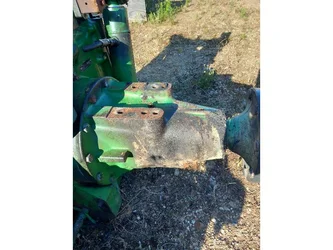
![Hub Gear Housing for JOHN-DEERE 6910]()
Hub Gear Housing for JOHN-DEERE 6910
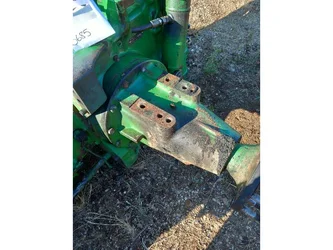
In stock, deliverable within 2-3 daysGet a quote![Hub Gear Housing for JOHN-DEERE 6910]()
Hub Gear Housing for JOHN-DEERE 6910
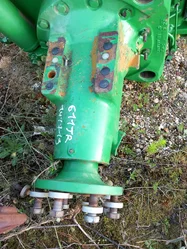
In stock, deliverable within 2-3 daysGet a quote![Trumpet ousing for JOHN-DEERE 6115 R]()
Trumpet ousing for JOHN-DEERE 6115 R
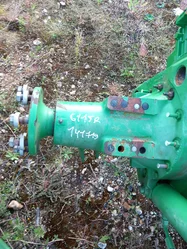
In stock, deliverable within 2-3 daysGet a quote![Trumpet ousing for JOHN-DEERE 6115 R]()
Trumpet ousing for JOHN-DEERE 6115 R
In stock, deliverable within 2-3 daysGet a quote![Trumpet ousing for JOHN-DEERE 6120 M]()
Trumpet ousing for JOHN-DEERE 6120 M
In stock, deliverable within 2-3 daysGet a quote![Trumpet ousing for JOHN-DEERE 6430]()
Trumpet ousing for JOHN-DEERE 6430
In stock, deliverable within 2-3 daysGet a quote![Trumpet ousing for JOHN-DEERE 6120 M]()
Trumpet ousing for JOHN-DEERE 6120 M
In stock, deliverable within 2-3 daysGet a quote![Hub Gear Housing for JOHN-DEERE 5100 R]()
Hub Gear Housing for JOHN-DEERE 5100 R
In stock, deliverable within 2-3 daysGet a quote![Hub Gear Housing for JOHN-DEERE 5100 R]()
Hub Gear Housing for JOHN-DEERE 5100 R
In stock, deliverable within 2-3 daysGet a quote![Hub Gear Housing for JOHN-DEERE 6250 R]()
Hub Gear Housing for JOHN-DEERE 6250 R
In stock, deliverable within 2-3 daysGet a quote![Hub Gear Housing for JOHN-DEERE 6250 R]()
Hub Gear Housing for JOHN-DEERE 6250 R
In stock, deliverable within 2-3 daysGet a quote![Hub Gear Housing for JOHN-DEERE 5100R]()
Hub Gear Housing for JOHN-DEERE 5100R
In stock, deliverable within 2-3 daysGet a quote![Hub Gear Housing for JOHN-DEERE 5100R]()
Hub Gear Housing for JOHN-DEERE 5100R
In stock, deliverable within 2-3 daysGet a quote![Trumpet ousing for JOHN-DEERE 6120 M]()
Trumpet ousing for JOHN-DEERE 6120 M
In stock, deliverable within 2-3 daysGet a quote![Trumpet ousing for JOHN-DEERE 6310]()
Trumpet ousing for JOHN-DEERE 6310
In stock, deliverable within 2-3 daysGet a quote![Trumpet ousing for JOHN-DEERE 2850]()
Trumpet ousing for JOHN-DEERE 2850
In stock, deliverable within 2-3 daysGet a quote![Trumpet ousing for JOHN-DEERE 5085 M]()
Trumpet ousing for JOHN-DEERE 5085 M
In stock, deliverable within 2-3 daysGet a quote![Trumpet ousing for JOHN-DEERE 7280 R]()
Trumpet ousing for JOHN-DEERE 7280 R
In stock, deliverable within 2-3 daysGet a quote![Trumpet ousing for JOHN-DEERE 6210]()
Trumpet ousing for JOHN-DEERE 6210
In stock, deliverable within 2-3 daysGet a quote![Trumpet ousing for JOHN-DEERE 6400]()
Trumpet ousing for JOHN-DEERE 6400
In stock, deliverable within 2-3 daysGet a quote![Trumpet ousing for JOHN-DEERE 6830]()
Trumpet ousing for JOHN-DEERE 6830
In stock, deliverable within 2-3 daysGet a quote![Trumpet ousing for JOHN-DEERE 6220]()
Trumpet ousing for JOHN-DEERE 6220
In stock, deliverable within 2-3 daysGet a quote![Trumpet ousing for JOHN-DEERE 6310]()
Trumpet ousing for JOHN-DEERE 6310
In stock, deliverable within 2-3 daysGet a quote![Trumpet ousing for JOHN-DEERE 5720]()
Trumpet ousing for JOHN-DEERE 5720
In stock, deliverable within 2-3 daysGet a quote![Trumpet ousing for JOHN-DEERE 6140 M]()
Trumpet ousing for JOHN-DEERE 6140 M
In stock, deliverable within 2-3 daysGet a quote![Trumpet ousing for JOHN-DEERE 8130]()
Trumpet ousing for JOHN-DEERE 8130
In stock, deliverable within 2-3 daysGet a quote![Trumpet ousing for JOHN-DEERE 5500 N]()
Trumpet ousing for JOHN-DEERE 5500 N
In stock, deliverable within 2-3 daysGet a quote![TROMPETTE DROITE]()
TROMPETTE DROITE
In stock, deliverable within 2-3 daysGet a quote![Trumpet ousing for JOHN-DEERE 6420]()
Trumpet ousing for JOHN-DEERE 6420
In stock, deliverable within 2-3 daysGet a quote![Trumpet ousing for JOHN-DEERE 4455]()
Trumpet ousing for JOHN-DEERE 4455
In stock, deliverable within 2-3 daysGet a quote![Trumpet ousing for JOHN-DEERE 6200]()
Trumpet ousing for JOHN-DEERE 6200
In stock, deliverable within 2-3 daysGet a quote![Trumpet ousing for JOHN-DEERE 7600]()
Trumpet ousing for JOHN-DEERE 7600
In stock, deliverable within 2-3 daysGet a quote![Trumpet ousing for JOHN-DEERE 7810]()
Trumpet ousing for JOHN-DEERE 7810
In stock, deliverable within 2-3 daysGet a quote![Trumpet ousing for JOHN-DEERE 7600]()
Trumpet ousing for JOHN-DEERE 7600
In stock, deliverable within 2-3 daysGet a quote![Trumpet ousing for JOHN-DEERE 2850]()
Trumpet ousing for JOHN-DEERE 2850
In stock, deliverable within 2-3 daysGet a quote![Trumpet ousing for JOHN-DEERE 5085 M]()
Trumpet ousing for JOHN-DEERE 5085 M
In stock, deliverable within 2-3 daysGet a quote
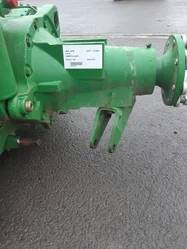
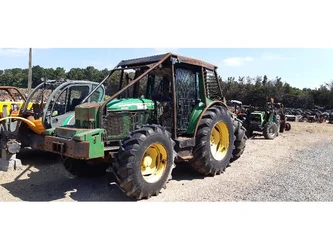
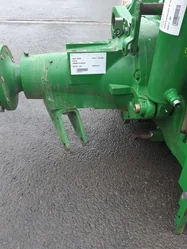

Used John Deere Trumpets: Rear Axle and Components
The components of the John Deere rear axle form a complex mechanical assembly where the trumpet plays a central role. This part houses the wheel shaft and ensures the connection between the differential and the tractor's drive wheels.
The system includes several interconnected components: trumpet bearings, oil seals (SPI joints), rings, and mounting supports. Each part contributes to the proper functioning of the final drive. Bearings withstand mechanical stresses while SPI seals prevent oil leaks.
Compatibility among these parts is crucial to maintaining tractor performance. John Deere models use specific part numbers depending on the series, notably for seals T21419 and R98915. Failure of a single component can compromise the entire transmission system.
What is a trumpet on a tractor?
- The trumpet is the terminal housing of the rear axle that contains the wheel shaft.
- This cylindrical metal part attaches directly to the axle housing.
- It transmits engine power from the differential to the tractor's drive wheels.
- Its inner diameter varies by model, for example between 109.987 and 110.023 mm on some McCormick models.
- The trumpet integrates braking mechanisms and hydraulic control circuits.
- It withstands load stresses and traction forces during agricultural work.
- Disassembly requires prior removal of mounting bolts and the wheel shaft.
Catalogue of Used John Deere Rear Axle Trumpets
Our extensive range covers the main John Deere series from model 1020 up to recent 6800s. You will find trumpets suitable for series 20, 30 and 50, including European and North American variants. The parts come from tractors carefully selected during dismantling.
Each trumpet retains its original numbering for easy identification. Models 2030, 2130 and their Spanish variants represent a significant part of our stock. Our technical team fully understands the mounting specifics unique to each series.
Delivery times remain short thanks to our permanent inventory. Whether you require a complete trumpet or only certain internal components, we have the corresponding spare parts. Our sales team guides you to the most suitable solution for your budget.
Oil Leak and SPI Seal: Diagnosis and Solutions
- Check for oil traces around the wheel shaft to detect a failing SPI seal.
- Regularly monitor the rear axle oil level; a quick drop indicates a significant leak.
- Inspect the seal seat on the shaft; scratches can compromise sealing even with a new seal.
- Lubricate the seal seat every 50 hours to prevent moisture and dust intrusion.
- Always replace the SPI seal when disassembling the trumpet to avoid later repairs.
- Clean contact surfaces thoroughly before reassembly to ensure perfect sealing.
- Use only manufacturer-referenced seals such as T21419 or R98915 for John Deere.
Identifying Leaks on the Axle
Fresh oil stains are the first sign of a sealing failure on your rear axle. Pay close attention to the area between the trumpet and the central housing, where leaks usually appear as dark droplets. This visual inspection quickly reveals the exact source of the issue.
Accurate leak location requires a methodical approach. First, thoroughly clean the surface with a degreaser to remove old oil traces. After a few hours of operation, new leaks appear clearly on the clean surfaces.
Focus especially on the trumpet seals and sealing rings, which often show signs of aging. Cracks in the rubber or deformation of contact surfaces indicate replacement is needed. Significant leaks may also come from worn bearings that allow oil to escape by capillarity.
Replacing Trumpet SPI Seals
- Remove the wheel shaft by freeing the rear axle splines with two levers positioned 180° apart.
- Extract the old SPI seal using an appropriate puller to avoid damaging the seat in the trumpet.
- Measure the trumpet's inner diameter to order the replacement seal with correct dimensions.
- Install the new SPI seal by applying a thin layer of grease on the sealing lip.
- Position the seal at the correct depth using a mandrel of appropriate diameter to prevent deformation.
- Reassemble all parts while respecting John Deere's specified bolt tightening torque.
- Refill the rear axle oil level according to the manufacturer's recommendations before first use.
John Deere Trumpet Disassembly Procedure
Start by completely draining the transmission housing before any intervention on the trumpet. Loosen the rear wheel nuts then raise the tractor on stands to secure the operation. Next, remove the brake control linkage obstructing access to the mounting bolts.
Proceed with the careful unscrewing of all the trumpet mounting bolts on the rear axle housing. Clean the threads and contact surfaces on the tractor side thoroughly to facilitate later reassembly. The trumpet usually comes off by itself once all fastening elements are removed.
If the trumpet remains stuck despite full bolt removal, use two levers placed 180° apart around the housing. Apply alternating and gradual pressure to separate the trumpet from the housing without damaging sealing surfaces. The trumpet and wheel shaft assembly can then be removed as one piece to allow maintenance of internal components.
Tractor trumpets come mainly in two electrical versions: 12V and 24V, depending on your tractor model. They fit both front and rear axles, offering installation versatility. Trumpets can be offered bare or complete with their integrated components, depending on your repair or replacement needs for your agricultural equipment.
Look out for oil stains on the ground beneath the rear wheels after extended parking. Visually check the seals around the trumpet and observe any drips on the housing. Regular oil level decreases in the transmission also reliably indicate leaks at the trumpet seals.
First, identify your John Deere tractor's serial number to determine exact compatibility. Series 20, 30, and 50 models require specific part numbers like T21419 or R98915. Our technicians assist you in selecting the right part by analyzing your equipment to ensure optimal installation and perfect fit with your rear axle.
First, remove all mounting bolts and the brake control linkage. If the trumpet remains stuck to the housing, use two levers positioned 180° apart around the trumpet to apply alternating pressures and gradually separate the assembly. The wheel shaft will then disengage from the rear axle splines along with the trumpet.
Several factors influence the price of a used John Deere trumpet, making prices variable. The cost depends on the configuration: a bare part is less expensive than a complete assembly with wheel shaft and brakes. The wear condition and the model rarity also affect market value.
Tractor generation is a key factor. Older series (20 or 30) have different prices than recent high-power models (6000 or 7000 series). For an accurate price, consult our online catalogue or contact our experts in Naintré for a personalized quote based on our stock.